I mentioned before that while I was in Vermont, I had the first 20 pages of my brand-new shiny WIP workshopped. I didn't mention that I also had one of the grad assistants, a published middle-grade author, take a look at it. She offered me some excellent feedback, particularly because I was able to tell her exactly what I was most concerned about in the piece and ask if this or that was working.
There is one character in my new project that I had particular reservations about. The character is sort of an antagonist to my main character, and I was afraid that by her very nature she would offend and alienate an entire group of people, thus making those readers hate me, my book, and any subsequent book I would publish (dream big, readers!). The GA said that was a possibility and offered a few suggestions for how I could fix that. Then, she said something that kind of blew my mind:
"But I wonder...do you even need this character at all?"
I have stacks of notecards on my end table outlining the plot of this book, giving character descriptions, linking emotional through-lines and explaining how the subplots interconnect. So as I sat in this teacher's lounge, the snow pummeling the ground outside the window, my mind flipped through all those cards, and I could not for the life of me think of one actual reason why I truly needed that character. She had some great one-liners, and she provided a nice thwart to my main character in the first few chapters. But in terms of the big picture, I didn't really need her. I had a few plans for her, but ultimately, the book could stand just fine without her.
Sometimes it's hard to see these things in the first draft. Heck, it's hard to see these things in the second, third, or fourth draft. But it's important to ask yourself, with every single character in your book -- "Does this character NEED to be here? Is he/she essential to the plot?" This is one of the things people are referring to when they say "Kill your darlings." Related to this question, but still just as important: "Could this character's role be fulfilled by another character already on the page?"
We've all read books where there are so many minor characters it's hard to keep them straight. When the author gives each character specific, essential roles and individual character traits, it's not really a problem. Our minds can keep track of these characters because the author has done such an excellent job keeping them apart, giving them their own unique role both in the plot and in the world created within the book (Anna and the French Kiss is a recent example of a book that I think does an excellent job of giving even minor characters important roles and individual characterizations.) But when there are too many unnecessary characters, it's easy for the reader to become frustrated -- particularly if they're having to flip back pages to see who is related to whom (which I've had to do before -- lame!)
On the flip side, there is the danger that if you only show the part of the characters that is essential to the plot, or if the characters only pop up when they're absolutely necessary, the characters will become, to borrow an (admittedly adult) term I learned at VCFA, your "plot bitches," there to serve you and only you, to move your plot forward and nothing else. Characters need to have lives of their own, and if they're popping up conveniently only to serve your plot and retreating into the shadows, waiting to strike again when the plot thickens...well, that's no good either.
As always, writing characters that are essential the plot but still have lives outside of it is a delicate balance.
If only this writing thing were easy.
Showing posts with label character development. Show all posts
Showing posts with label character development. Show all posts
Saturday, January 29, 2011


Tuesday, November 9, 2010
Writing (and Revising) the Hard Scenes
A lot of bad stuff happens in my WIP.
I mean, that should really go without saying. It is a dystopian/sci-fi. There are very clear villains. And the premise involves killing.
So. Yeah. A lot of bad stuff happens.
But when I started writing the book, I never realized how hard this stuff would be on me. Because it's not just the villains who suffer in my book. The good guys suffer, too. They go through some painful stuff - physically and emotionally. There's one scene that makes me cry every time I read it - and when you put your very first word on the page a year ago, you end up going through a lot of readings. There are other scenes that make my stomach turn because...well, they're kind of gory.
Every time I read some scenes, I consider changing the outcome. Even though I've always planned for things to turn out that way, even though I know they work better if I leave it as is, I can't help but think to myself, "What if I just tried it another way?" And maybe I even let the result play out in my head...but it never works as well.
And that's how I know I'm making the right choices. Because even when it kills me to do mean things to my characters, I know, ultimately (as strange as it is) it's for the best. Kids don't grow up if they're coddled, and the same goes for characters. You have to let them deal with the hard stuff, with the heartache. And it's so rewarding to see how they change because of it. (Did I just compare my characters to children? YUP.)
So don't be afraid to write the hard scenes. Let your characters suffer. You'll be glad you did.
Friday, September 24, 2010
Creating Compelling Characters - The Ones You Love to Hate
For The Great Blogging Experiment, I thought I would focus my post on a character study - characters you love to hate, hate to love, but still can't get enough of. (That sort of rhymes! But not on purpose.) These characters are mean, but funny. They're jerks but they still make you swoon. This kind of dichotomy of character is one of the best ways to get something compelling, to show the deeper layers of a character and prove that there's a lot more to them than what the other characters in the book (or TV show, cause I have one of those) initially see.
 1. Logan Echolls. Here's a little story about my relationship with Logan Echolls, from the absolutely brilliant show Veronica Mars. My friend Shana Silver (who hosts Veronica Mars discussions on her blog) encouraged me to watch the show, and she kept talking about how great Logan was, how he was so swoon-worthy (not to mention that Veronica Mars has killer writing and plot development). So when I saw that Veronica Mars was available to stream instantly on Netflix, I watched. I waited. I waited to like Logan. Episode after episode went by, and though I immediately saw the sheer genius in the writing, I thought Logan sucked. He was a JERK. He had few redeeming qualities and I couldn't figure out what was so great about him. Then something very specific happens in one episode, which I can't mention because I'm not the kind of girl who posts spoilers on her blog. (But it's this thing. And then this happens. Yeah.) Then I sent Shana a tweet along the lines of OMG AWESOME YOU WERE RIGHT I BOW TO YOU. (Paraphrasing there.) Anyway, Logan is an ass most of the time. Even after he softens up, he's STILL an ass. But he's so complicated and twisty and has this dark past and he gets drunk and says the world's most romantic speeches and you just can't help but love him. Even when he's being a jerk.
2. Parker Fadley: Parker is the main character in Courtney Summers' debut CRACKED UP TO BE. I think Summers is really good at writing the kind of character I'm talking about here - the mean girl that you still like. Parker is a jerk to everyone around her. She pushes everyone away, she alienates herself, she does things that she knows will hurt other people. And yet...she cracked me up. I loved Parker almost immediately because she was so funny. Yeah, she used her humor to make fun of other people, and of course that's mean...but it was true, too. And it was great. And I could see that she was tortured, too, which obviously important to the overall mystery in the book.
3. Samantha Kingston: Sam is another mean girl that I loved. In BEFORE I FALL by Lauren Oliver, we really got to see her be mean from day 1. She and her friends rule the school with their superior attitude, and although Sam occasionally seems to feel bad about it, she shakes it off pretty quickly. But after she dies and her days start repeating, Sam starts to change. She gets angry, then she gets nicer, then she grows up. She turns into this whole other person, someone who I could actually like. So even though I don't think I could like the Samantha at the beginning of the book, I think I would probably get along with the one at the end - maybe we'd even be friends.
 4. Severus Snape. I can't talk about him without posting spoilers, so if you haven't finished the series, skip past this paragraph and get thee to a bookstore or library. I don't think there can possibly be a more perfect "love to hate" character in children's literature. I mostly just love Snape. But there is no question that he's a creepster. He's a jerk to the kids. Repeatedly. He openly displays favoritism to people in his house. He's mysterious and sneaky and he starts out as a bad guy. He betrays the Potters! He betrays Lily, the love of his life! But as soon as he realizes what he's done, he dedicates his life to fixing it. He worked so great as a character because we were all constantly questioning his motives - which side was he on? Who was he working for? I was a firm believer in Snape's innocence the whole time. But I had many friends who believed otherwise, especially after the whole killing Dumbledore thing. He sparked discussion and debate and loyalty. He was mean on the outside but in his heart, he was soft and did it all for love. He is a compelling character if ever one existed.
So, in all of these mean-girl (and boy) characters, what are the common threads that make them compelling? Growth. Humor. Mystery. Weakness. A complicated past. That's what it takes to create compelling characters.
Who are your favorite love-to-hate characters, and what is it about them that makes them so compelling?

2. Parker Fadley: Parker is the main character in Courtney Summers' debut CRACKED UP TO BE. I think Summers is really good at writing the kind of character I'm talking about here - the mean girl that you still like. Parker is a jerk to everyone around her. She pushes everyone away, she alienates herself, she does things that she knows will hurt other people. And yet...she cracked me up. I loved Parker almost immediately because she was so funny. Yeah, she used her humor to make fun of other people, and of course that's mean...but it was true, too. And it was great. And I could see that she was tortured, too, which obviously important to the overall mystery in the book.
3. Samantha Kingston: Sam is another mean girl that I loved. In BEFORE I FALL by Lauren Oliver, we really got to see her be mean from day 1. She and her friends rule the school with their superior attitude, and although Sam occasionally seems to feel bad about it, she shakes it off pretty quickly. But after she dies and her days start repeating, Sam starts to change. She gets angry, then she gets nicer, then she grows up. She turns into this whole other person, someone who I could actually like. So even though I don't think I could like the Samantha at the beginning of the book, I think I would probably get along with the one at the end - maybe we'd even be friends.
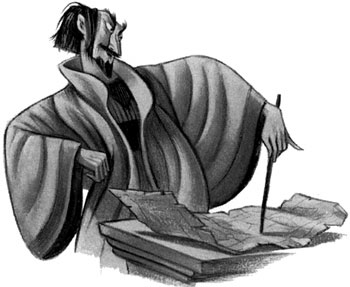 4. Severus Snape. I can't talk about him without posting spoilers, so if you haven't finished the series, skip past this paragraph and get thee to a bookstore or library. I don't think there can possibly be a more perfect "love to hate" character in children's literature. I mostly just love Snape. But there is no question that he's a creepster. He's a jerk to the kids. Repeatedly. He openly displays favoritism to people in his house. He's mysterious and sneaky and he starts out as a bad guy. He betrays the Potters! He betrays Lily, the love of his life! But as soon as he realizes what he's done, he dedicates his life to fixing it. He worked so great as a character because we were all constantly questioning his motives - which side was he on? Who was he working for? I was a firm believer in Snape's innocence the whole time. But I had many friends who believed otherwise, especially after the whole killing Dumbledore thing. He sparked discussion and debate and loyalty. He was mean on the outside but in his heart, he was soft and did it all for love. He is a compelling character if ever one existed.
So, in all of these mean-girl (and boy) characters, what are the common threads that make them compelling? Growth. Humor. Mystery. Weakness. A complicated past. That's what it takes to create compelling characters.
Who are your favorite love-to-hate characters, and what is it about them that makes them so compelling?
Tuesday, September 21, 2010
Fun Non-writing Sites Every Writer Should Know
As writers, we use many resources to help us in our quest to create perfect prose - support groups, forums, editing software, etc. Today, I'd like to highlight some of my favorite sites to use for character development, plot research, and the like that I think every writer should know. (OMG most boring intro ever! But I'm too tired to be creative and I don't want to skip this entry until I have time to write something better. So, yeah. Lame intro it is.)
Polyvore. Polyvore is great for people who like to create character boards or people who like to play with fashion or character clothes/setting (read: girls.) The site allows you to make your own style boards by pulling fashion elements, background designs, faces, etc. from around the Internet, and even uploading your own if you can't find what you're looking for. They have a great selection of stuff and the site is extremely user-friendly. I actually made a style board for my next project, but I left it on my other computer and I can't access that right now. Plus its kind of boring. So instead I'll show you two examples straight from the Polyvore site:

 See how these images bring to mind two very different ladies? To use the style creator I'm talking about here, click on "Create a Look." To browse other style boards, click on "Explore."
Playlist. I personally can't listen to music while I'm actually writing, but I do think it's fun to create playlists that match the mood and theme of my novel. And that's where Playlist comes in. Although there are many other music sites, I think Playlist has a pretty good selection (because I can sometimes have obscure taste, and Playlist seems to usually have what I want...usually), and I like that it's all online - no download required, and it integrates easily with blogs and other social networks. Of course, when I find something I love or when it moves from my "experimental playlist" to my "official playlist," I take a cue from Maggie Steifvater and pay the 99 cents to download the song. Support the artists! But until then, Playlist works well for introducing me to new songs and artists, and helping me rearrange my list from anywhere.
Picnik. Ever wanted to experiment with a book cover, graphic element in your novel, character face, or other image, but don't have the fancy photo editing software required? Look no further than Picnik, an online image editing site that's easy and free. It has a TON of features and makes complicated tasks like resizing, messing with the saturation, etc. super simple. I even used Picnik to make a super awesome lame banner for my 2009 NaNo project, which I'm still editing and trying to make awesome.
OK, so those are my non-writing sites you should know! What are your favorites? And come back on Thursday (because tomorrow is Book-Crush Wednesday!) for the writing sites everyone should know!
Polyvore. Polyvore is great for people who like to create character boards or people who like to play with fashion or character clothes/setting (read: girls.) The site allows you to make your own style boards by pulling fashion elements, background designs, faces, etc. from around the Internet, and even uploading your own if you can't find what you're looking for. They have a great selection of stuff and the site is extremely user-friendly. I actually made a style board for my next project, but I left it on my other computer and I can't access that right now. Plus its kind of boring. So instead I'll show you two examples straight from the Polyvore site:
Playlist. I personally can't listen to music while I'm actually writing, but I do think it's fun to create playlists that match the mood and theme of my novel. And that's where Playlist comes in. Although there are many other music sites, I think Playlist has a pretty good selection (because I can sometimes have obscure taste, and Playlist seems to usually have what I want...usually), and I like that it's all online - no download required, and it integrates easily with blogs and other social networks. Of course, when I find something I love or when it moves from my "experimental playlist" to my "official playlist," I take a cue from Maggie Steifvater and pay the 99 cents to download the song. Support the artists! But until then, Playlist works well for introducing me to new songs and artists, and helping me rearrange my list from anywhere.
Picnik. Ever wanted to experiment with a book cover, graphic element in your novel, character face, or other image, but don't have the fancy photo editing software required? Look no further than Picnik, an online image editing site that's easy and free. It has a TON of features and makes complicated tasks like resizing, messing with the saturation, etc. super simple. I even used Picnik to make a super
OK, so those are my non-writing sites you should know! What are your favorites? And come back on Thursday (because tomorrow is Book-Crush Wednesday!) for the writing sites everyone should know!
Thursday, September 9, 2010
How Writing Has Ruined My Ability to Enjoy Anything, Ever.
So last week, I was watching The Princess Bride with the hubs.
This is one of my most favorite movies ever. I mean, come on:


Princess Buttercup is totally a wuss.
(OK, there are plot spoilers coming up, but if you haven't seen this movie then you FAIL AT LIFE so I'm going to pretty much disown you anyway.)**
OK, so they're in the fireswamp. And Westley gets attacked by an R.O.U.S. And instead of DOING ANYTHING like grabbing a a rock or whacking the thing with a tree branch, home girl literally stands by and watches as the love of her life gets eaten half to death. Lamesauce.
Then later, she tells the Evil Prince Humperdinck that she won't marry him, and he's like, "It's cool, sugarpie. I'll send out some ships to look for your BF." The fact that A: She believes that Westley would actually leave in the first place and B: She believes for even a second that Humperdinck would do as he says makes her a TOTAL idiot.
Look, I get it. Buttercup is supposed to be a classic damsel in distress. After all, it is a fairytale. And I'm used to ass-kickers like Katniss and Katsa and Hermione who don't stand idly by and watch their boyfriends get attacked by giant rodents. But Buttercup was so flat and annoying that I had to wonder...WHAT does hotty-mctotty Westley see in her anyway? I mean, one minute she's like ordering him around the farm, and the next they're OMGTOTALLYMAKINGOUT?? No way. Westley's way too awesome for that crap.
So I ranted and raved throughout the whole movie, driving my husband crazy about my complaints on the weak characterization and how Buttercup was the only character who wasn't remotely funny. Until finally hubs told me to shut up and enjoy the movie.
And then I realized that we'd had this conversation before.
The fact of the matter is, as writers, we're always looking at our characters, analyzing them, trying to figure out how to make them better. I know one of the main things I need to focus on in an upcoming round of revisions is characterization of two of my characters, because they're falling shy of where I'd like them to be.
But since we're always looking for how to make our own work better, and then we CP read and try to seek out the flaws, we start to lose a sense of how to just read and watch for fun. I've noticed that my critical reading skills have improved greatly, but my ability to escape into the world of a book has drastically decreased. I'm always questioning, always asking WHY? Why would a character act that way? Why would the plot go there?
I'm not sure if this is a good thing or a bad thing. On the one hand, I'm a more active, conscious reader. But on the other, I can't just zone out with a book. And I miss that.
What about you? How has being a writer changed the way you read or watch TV/movies?
**OK, that was a joke. Except it really wasn't. No really though, this movie is more than 20 years old and one of the most classic and quotable films of my generation, so I think a few spoilers are allowed.
This is one of my most favorite movies ever. I mean, come on:
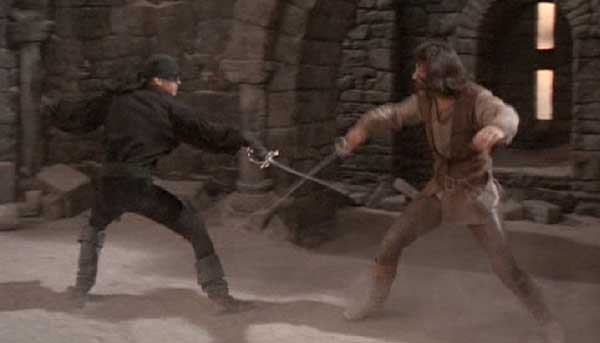
Fencing!

Cary Elwes!

Torture!*

Cary Elwes!

Revenge!

Cary Elwes!

True love!

Cary Elwes!
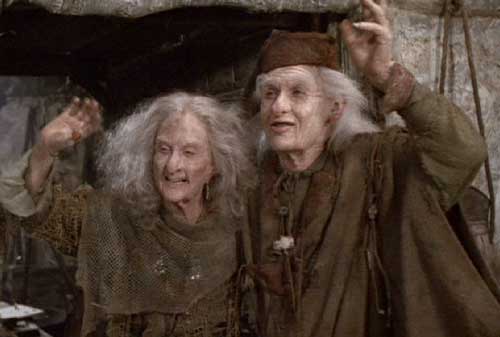
Miracles!
Etc.
OK, so I probably watch this movie once a year, at an absolute minimum, but probably more like 5-6 times. It's my happy movie that I play when I've had a bad day. My sister and I used to walk around our block reciting lines from the movie. And yet somehow I'd never noticed it before but...Princess Buttercup is totally a wuss.
(OK, there are plot spoilers coming up, but if you haven't seen this movie then you FAIL AT LIFE so I'm going to pretty much disown you anyway.)**
OK, so they're in the fireswamp. And Westley gets attacked by an R.O.U.S. And instead of DOING ANYTHING like grabbing a a rock or whacking the thing with a tree branch, home girl literally stands by and watches as the love of her life gets eaten half to death. Lamesauce.
Then later, she tells the Evil Prince Humperdinck that she won't marry him, and he's like, "It's cool, sugarpie. I'll send out some ships to look for your BF." The fact that A: She believes that Westley would actually leave in the first place and B: She believes for even a second that Humperdinck would do as he says makes her a TOTAL idiot.
Look, I get it. Buttercup is supposed to be a classic damsel in distress. After all, it is a fairytale. And I'm used to ass-kickers like Katniss and Katsa and Hermione who don't stand idly by and watch their boyfriends get attacked by giant rodents. But Buttercup was so flat and annoying that I had to wonder...WHAT does hotty-mctotty Westley see in her anyway? I mean, one minute she's like ordering him around the farm, and the next they're OMGTOTALLYMAKINGOUT?? No way. Westley's way too awesome for that crap.
So I ranted and raved throughout the whole movie, driving my husband crazy about my complaints on the weak characterization and how Buttercup was the only character who wasn't remotely funny. Until finally hubs told me to shut up and enjoy the movie.
And then I realized that we'd had this conversation before.
The fact of the matter is, as writers, we're always looking at our characters, analyzing them, trying to figure out how to make them better. I know one of the main things I need to focus on in an upcoming round of revisions is characterization of two of my characters, because they're falling shy of where I'd like them to be.
But since we're always looking for how to make our own work better, and then we CP read and try to seek out the flaws, we start to lose a sense of how to just read and watch for fun. I've noticed that my critical reading skills have improved greatly, but my ability to escape into the world of a book has drastically decreased. I'm always questioning, always asking WHY? Why would a character act that way? Why would the plot go there?
I'm not sure if this is a good thing or a bad thing. On the one hand, I'm a more active, conscious reader. But on the other, I can't just zone out with a book. And I miss that.
What about you? How has being a writer changed the way you read or watch TV/movies?
*Yeah, I skipped a few. But that would be a lot of pictures. For the record, it's: "Fencing, fighting, torture, revenge, giants, monsters, chases, escapes, true love, miracles!" And Cary Elwes.
**OK, that was a joke. Except it really wasn't. No really though, this movie is more than 20 years old and one of the most classic and quotable films of my generation, so I think a few spoilers are allowed.
Tuesday, August 3, 2010
Carolyn Mackler’s Four Keys to Creating Characters (SCBWI Post!)
Well, I am officially back from SCBWI! It was awesome. Being surrounded by all the inspiration and learning so much was incredible. And children's book authors and illustrators are some of the funniest people I've ever met. I'll post some photos and a general conference review (including overall conference tips) in another post, but I thought I would continue posting notes from the conference sessions I attended since I have enough to make days and days worth of posts.
One of my favorite sessions was Carolyn Mackler's breakout session on creating characters that come to life. Not only is Carolyn Mackler totally adorable and down-to-earth, but she gave some great advice on how to create distinct voices for each of your characters (this came in particular handy when she was writing her novel Tangled, which has four distinct characters, and which I will be giving away a SIGNED copy of on the blog at some point in the next month. I have epic, epic contests in store, people.)
So, here without further ado, are Carolyn Mackler's four keys to creating characters:
- Think about the character's quirks. Every person on the planet has a quirk. Fun Heather fact! (Which is also potentially gross) I chew my cuticles when I get anxious or nervous. Not my nails, my cuticles. Little mannerisms like that are inherent in all of us - and since your characters are people too, they need to have quirks as well. Who is your character? What do they do? If you think you're running low on material, head somewhere and people watch - this can be a great way to find some new quirks to give to a character. Alternatively, think about some people you know now, or people you knew when you were in high school. What were their quirks? Did they collect bobble-heads? Nod whenever someone else was speaking? Those are the kinds of things you can incorporate.
- Nail their specific language. When I was in high school, I had an excellent biology teacher. Seriously. The best (and only halfway decent) science teacher I'd ever had in my life. Unfortunately, she ended up being the butt of a lot of jokes in the hallway because she said, "Mmkay?" at the end of almost every sentence - and this was right when South Park first skyrocketed to popularity, with an annoying guidance counselor character who had the same unfortunate habit. It's sad that her speech issue overshadowed her incredible knowledge (at least at first until us smart-ass teenagers wised up), but my point here is that people have language ticks - and so should your character. Does your character talk in questions or statements? Do they swear or not? Do they say "I mean" or "like"? (Because some teens say those things, but not all of them do. And some adults, like ME, are perpetually stuck in our teen years and also say those things.) To really test your language, read your book aloud so you can see the rise and fall of the dialogue and how often you're repeating words.
- Research. For Tangled, Carolyn Mackler had to write her first male POV ever. She felt pretty daunted by the task, so as she was giving talks she would say, "By the way, I'm looking for some male teens to talk to for some research for my new book." And at one of her presentations, a guy who was the spitting image of one of her characters came up to her and offered to chat. She set up a series of phone interviews and they chatted for hours. Carolyn asked how he viewed his body, what music he liked, what he did when he worked out, what he thought of his friends - everything she could think of to get into his head and create a unique and truthful character. Another one of her characters is an actress and goes on an audition, so she was able to get permission to sit in on an audition process, and afterward she interviewed a teen actress. All of her research - because fiction books do require research - added to the authenticity of the voice in her novel.
- Ask questions about your character. Get to know them and get inside their head. I talked about this a little yesterday when I discussed Rachel Vail's voice workshop. But think about things like, what is the first thing they do in the morning? What does the inside of their closet look like? What do they keep hidden in their underwear drawer? Who would the character contact if something good happened, and what would that good thing be? What do they do when they’re anxious? What are they proud of? What are they ashamed of? How do they feel about their family? What is their family status? Carolyn likes to go for walks to get her character questions answered. I prefer drives. You find whatever works for you, as long as you make it happen.
Thursday, June 17, 2010
My Character Did WHAT?! Notes on Character Consistency
You might remember, oh dearest blog readers, that I've been watching How I Met Your Mother recently. (You might need reminding that, since I don't have cable, I generally catch on to shows about five years after everyone else realizes that they're awesome.) And although I generally think the show is totally amazing (Jason Segel? NPH? Kissing?), I do think they have some characterization issues they need to sort out. Specifically, with the Ted character, and how his adult narration is totally inconsistent.
The other night, I watched the season 5 episode, "Robin 101." In it, Barney gives Ted the finger by pulling the classic, "Is this loud enough? Want me to turn it up for you?" gag. But adult Ted, who's narrating the story, doesn't tell his kids that Barney gave him the finger. He says Barney gave him a thumbs-up, presumably to protect his kids from the evilness that is The Middle Finger (but more likely because you can't give someone the finger on CBS).
 In another season 5 episode, "Bagpipes," adult Ted tells his kids about how he can never concentrate because his upstairs neighbors are always playing the bagpipes very loudly. But really, "playing the bagpipes" is a euphemism for having sex very loudly. Again, the way adult Ted tells his kids the story, it's clear he's using the substitution in order to protect his kids, and he catches himself just in time.
Another example is in an episode (I think this one's from season 4) where Ted is discussing the Lethal Weapon movies. He mentions the classic Roger Murtaugh line, "I'm too old for this...stuff." Because the real line (which involves a different s-word that I'm not putting on this blog today because I know for a fact that I have underage readers) is, apparently, offensive to his kids.
And all of that is great. It shows that adult Ted cares about protecting his kids, and is a bit of a fussy old dad. Better yet, it totally jives with who young Ted is, because young Ted is definitely on track to be a bit of a fussy old dad.
Except for one, teeny, tiny detail.
The entire show is built on the premise that Ted is telling these stories to his kids. In fact, the first word in almost every episode is "Kids," reminding us that we're still in story mode, and that these are still flashbacks. But not every episode has a bagpipe euphemism to make it more kid-friendly. In fact, there was one episode that was almost entirely about Barney meeting his 200th conquest - Barney, who adult Ted calls "Uncle Barney," so it's obvious that the kids still know who he is. Another episode revolved around the various methods and tricks Barney uses to pick girls up at bars. Still other episodes mention how Ted and Co. get drunk, do beer bongs, drink shots, have promiscuous sex, and are frequently irresponsible.
 Maybe the euphemisms are unspoken, and adult Ted is actually always using them. But maybe there's actually some inconsistency going on here. Would Ted (who is probably, let's face it, a fuddy old dad much like the character formerly played by the man who voices him) really expose his sweet little kids to all this sex, beer, and discussion of architectural porn?
No. It's just not consistent to his character. It's not consistent with his young character, and it's not consistent with the behaviors he sometimes exhibits when he randomly chooses to censor himself when it's convenient for the network.
Of course, I totally understand that it just makes for better TV to have Ted censor himself sometimes and not others. And I still think the show is hilarious. But for character-development purposes, this makes no sense. When you're writing, you want your character to be as consistent as possible. Barring any growth your characters undergo, the decisions they make and the actions they take need to make sense to who they are as a person, and what they would do needs to be true to who they are. Don't have them say on one page that they're a devout Catholic, then in the next chapter say GD when they stub their toe. Don't say they're vegan, then put them in leather pumps for their college acceptance interviews. And don't have them claim to be protective one second if the next they're going to throw caution to the wind and talk about how Aunt Lilly has a stripper doppelganger.
The other night, I watched the season 5 episode, "Robin 101." In it, Barney gives Ted the finger by pulling the classic, "Is this loud enough? Want me to turn it up for you?" gag. But adult Ted, who's narrating the story, doesn't tell his kids that Barney gave him the finger. He says Barney gave him a thumbs-up, presumably to protect his kids from the evilness that is The Middle Finger (but more likely because you can't give someone the finger on CBS).
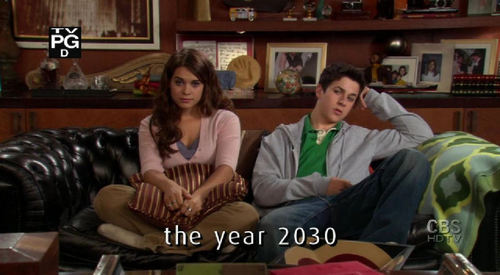
Another example is in an episode (I think this one's from season 4) where Ted is discussing the Lethal Weapon movies. He mentions the classic Roger Murtaugh line, "I'm too old for this...stuff." Because the real line (which involves a different s-word that I'm not putting on this blog today because I know for a fact that I have underage readers) is, apparently, offensive to his kids.
And all of that is great. It shows that adult Ted cares about protecting his kids, and is a bit of a fussy old dad. Better yet, it totally jives with who young Ted is, because young Ted is definitely on track to be a bit of a fussy old dad.
Except for one, teeny, tiny detail.
The entire show is built on the premise that Ted is telling these stories to his kids. In fact, the first word in almost every episode is "Kids," reminding us that we're still in story mode, and that these are still flashbacks. But not every episode has a bagpipe euphemism to make it more kid-friendly. In fact, there was one episode that was almost entirely about Barney meeting his 200th conquest - Barney, who adult Ted calls "Uncle Barney," so it's obvious that the kids still know who he is. Another episode revolved around the various methods and tricks Barney uses to pick girls up at bars. Still other episodes mention how Ted and Co. get drunk, do beer bongs, drink shots, have promiscuous sex, and are frequently irresponsible.

No. It's just not consistent to his character. It's not consistent with his young character, and it's not consistent with the behaviors he sometimes exhibits when he randomly chooses to censor himself when it's convenient for the network.
Of course, I totally understand that it just makes for better TV to have Ted censor himself sometimes and not others. And I still think the show is hilarious. But for character-development purposes, this makes no sense. When you're writing, you want your character to be as consistent as possible. Barring any growth your characters undergo, the decisions they make and the actions they take need to make sense to who they are as a person, and what they would do needs to be true to who they are. Don't have them say on one page that they're a devout Catholic, then in the next chapter say GD when they stub their toe. Don't say they're vegan, then put them in leather pumps for their college acceptance interviews. And don't have them claim to be protective one second if the next they're going to throw caution to the wind and talk about how Aunt Lilly has a stripper doppelganger.
Monday, May 17, 2010
The Art of the Multi-Dimensional Villain
Everyone loves to hate a villain. They're evil. They're miserable. They're always running about mucking up everyone's lives. In books where the villain wins, you want to cry and throw things a little, and the times when the hero is vindicated, you can feel your heart swelling.
Still, just because a villain is technically the bad guy doesn't mean he or she should be all bad. In fact, you need to find a way to give your villain some depth, otherwise they'll fall totally flat and will be unbelievable. Even the big historical villains had a hard time somewhere along the way - and that often turned them into the person they became. Hitler, for example, had a troubled relationship with his father, who beat him and sent him to a technical school, even though young Adolf wanted to attend a school for artists. Serial killer Ted Bundy struggled with depression, and found out as an adult that the parents who raised him were really his grandparents, and his "older sister" was actually his mom. Another serial killer, Charles Manson, also had family and abandonment issues; apparently, Manson's mother once sold baby Charles to a childless waitress for a pitcher of beer. An uncle rescued him a few days later. Although these stories certainly don't excuse what the men would eventually become, they do make you feel just a little sorry for who these men are and what they had to go through - a crucial element in the art of villain creation.
Until recently, I had a villain who was all evil, no sorrow. Then I chatted it out with my writer-friends (who are awesome), and now he has some neurosis that fit his character oh-so perfectly (I just have to write them into the MS. Don't you love revisions?) Since talking about my character will make no sense - you don't know him or my story, I thought I would share some of my favorite, well-known, multi-layered villains with you. (Please note that the character discussions obviously have some spoilers for their back-story, so if you're not familiar with the story but plan on being one day, perhaps you want to skip over that character and move on to the next. They're not too bad, but maybe you'll hate me if you read them. I don't know, but I do know that I don't want you to hate me if you don't like spoilers without warning, so...You've been warned.)
Exhibit A: Sue Sylvester
Quote: "I will go to the animal shelter and get you a kitty cat. I will let you fall in love with that kitty cat. And then, on some dark, cold night I will steal away into your home and punch you in the FACE."
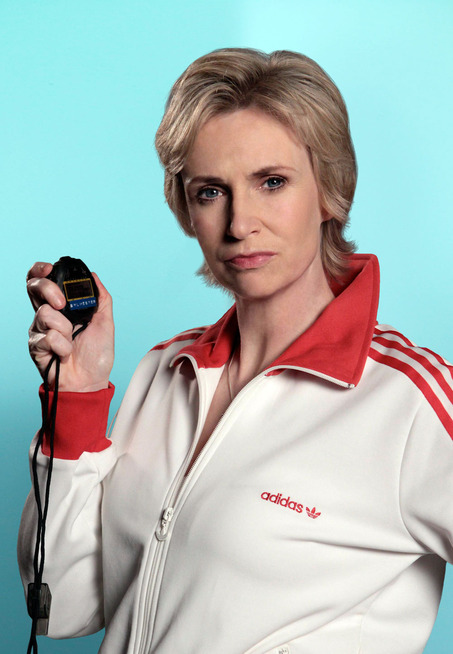
Sue is a great villain. She is mean to everyone - everyone - the students, the teachers, even herself, at times. Her intentions are always clear and never waver, and even when she seems to have a last-minute change of heart, in the end we see it's all about getting rid of the Glee club and getting the funding for her Cheerios back. She's selfish, obnoxious, arrogant, and hilarious. But then, about halfway through the first season, she did something that seemed so heinous that even I was appalled - she invited a girl with Down syndrome to join the cheerleading team (a very un-Sue move). Of course, people were suspicious, and Sue pushed the girl hard to keep up at practice. When her behavior was questioned, Sue just said she's not going to treat the girl any differently because of her handicap. At the end of the episode, we saw Sue visiting her sister at a nursing facility. Her sister has Down syndrome, and our evil villain was so sweet and caring that I almost cried. In fact, every time Sue visits her sister and shares this little glimpse at her softer side, I get a little choked up. I love the softer side of Sue, and it's almost enough to make me forget that she's totally sabotaging everyone in the Glee club - almost.
Exhibit B: Mrs. Coulter from His Dark Materials by Philip Pullman
Quote: “Oh, there is more suffering to come. We have a thousand years of experience in this Church of ours. We can draw out your suffering endlessly.”

(Excuse my use of the movie Mrs. Coulter for the picture. Nicole Kidman was creepy, but the movie totally missed the mark in every way, and made the first book way less awesome than it really was.) Mrs. Coulter is one of the most terrifying women in literature, in my opinion. She comes off so sweet and innocent, like she really wants to protect and help young Lyra. She takes Lyra under her wing, and Lyra is ensnared by her beauty and grace. Of course, we find out soon enough that Mrs. Coulter and her evil little golden monkey are actually up to no good, and are in fact responsible for ordering the separation of children from their souls. Mrs. Coulter is evil, definitely, but she also has a complicated past that wraps her up even further in the mysteries of the book. I won't spoil the past here, though, because I'm hoping you pick up the book (maybe even order the series from The Book Depository for just $19! For three amazing books!) and find out for yourself what makes Mrs. Coulter multi-dimensional - and whether or not she redeems herself.
Exhibit C: Lord Voldemort from Harry Potter by J.K. Rowling
Quote: "There is nothing worse than death, Dumbledore!"

Voldemort is probably my favorite example of the sympathetic, multi-dimensional baddie. We hated him through five books, our hate only growing more passionate with each one, then, suddenly, we read Half-Blood Prince, and we started to feel just a little sorry for him. Obviously, the kid was still totally creepy. But you could see exactly where he got his Muggle/half-blood hatred from, even through he himself has a Muggle father. And the situation with his orphanage, where he got almost no personal attention, and had no idea who he was or how to control his evil urges and power, was obviously not ideal. If only he'd been raised by someone who cared, then maybe none of this would have happened. If only Tom Riddle Sr. had really loved Merope enough to stick around. If only Merope had been strong enough to get herself together, run a comb through her hair, and be a badass single mother. If only Marvolo Gaunt wasn't such a misogynist jerk to his only daughter, then maybe she could have been strong and independent all along. But none of those things happened, and instead Voldemort turned into, well, Voldemort. Raised in circumstances much like Harry's, he became something very, very different - and of course, this comparison to our hero only further heightens the complexity and sadness we feel for our lonely villain, who uses power to get friends he's never had. Is it possible to cry through snake-like nostrils? I'm sure lonely Lord Voldemort can tell us it is. Then he blows the head off another Muggle, and we forget we ever felt sorry for him at all.
There are a ton of excellent villains with many layers - layers like onions. (Yes, shameless Shrek reference there. Which, hey, there's another villain with issues! Not Shrek, but Lord Farquaad, who is so short he's self-conscious about it and tries to overcompensate by being a raging jerk.) So, you tell me...who's your favorite multi-dimensional villain?
Friday, February 26, 2010
The elusive "teen voice"
Before you read this post, check out my pre-famous author interview on Anne Riley's blog!
This post is for my YA writer friends, or anyone who puts teen characters in their novels. If you don't, you can feel free to skip this in your Google reader line-up, blogger dashboard, or whatever other method you use to enjoy the fuzzy goodness that is my blog.
 About two weeks ago, I won a contest on the lovely Ms. Myra McEntire's blog for a copy of Hex Hall by Rachel Hawkins. But the day before I found out I won, a friend of mine, who had read the book and was dying to discuss it with someone, offered to send me her ARC, on the express promise that I return it to her when I was finished. By the time I found out I won, the other copy was already in the mail. So I told my friend that I would read her copy until my copy arrived, then return her copy and finish up whatever was left with my own copy (and if I say "copy" one more time in this sentence I think my blog is going to explode). Needless to say, I devoured my friend's copy of the book in a few days, and it is already in the mail back to her. I am so thrilled to have my very own copy of this book on my way to me so that I can add it to my collection and visit it over and over again, not only because the story and characters are fun and engaging, and the plot quite brilliant, but because Rachel Hawkins has mastered something that most YA writers agonize over trying to perfect - the teen voice.
Hex Hall is narrated by Sophie Mercer, a 16-year-old who found out three years ago that she's a witch. And even though I love that aspect of the book (and the fact that Hawkins freely references Harry Potter in an extremely appropriate way), what I love even more is that, by the end of the book, I felt as if I knew Sophie and all of her quirks. More than that, I wanted to be her friend. I found her hilarious and sarcastic and smart, but not in-your-face about it. I felt like I was really reading from a teenager's point of view, but not once was I annoyed with trivialities, and I don't remember there being an "OMG!!!" or a "like, totally!" to be found. (Although "like, totally!" might be very 1999 of me. I have no idea. I am old and out of touch. Well, not really old, but old enough for the kiddos to think I'm out of touch, anyhow.) But not for one second did I doubt that Sophie was 16. She made me laugh with her quick-witted retorts. She was genuine. She gushed over boys in almost the same breath that she condemned them. She simultaneously hated her mom and loved her. Her vocabulary was appropriate for her age, and she didn't talk down to the reader. I honestly can't remember the last time that I thought a first-person contemporary teen narrator was this genuine, believable, and just plain fun.
I know this book is on a lot of people's radars, but if you're writing a contemporary YA with a teen narrator, especially a female teen, this book is a must-read. Hawkins completely nails the teen voice. I can't believe she's a debut author, and I look forward to seeing more of both her and Sophie. Rachel Hawkins is also on Twitter, and you should follow her there, because she's fabulous.
OK, now that I'vetotally gushed over a book given you some required reading, here are some tips to help make the teen voice in your YA novel more genuine:
This post is for my YA writer friends, or anyone who puts teen characters in their novels. If you don't, you can feel free to skip this in your Google reader line-up, blogger dashboard, or whatever other method you use to enjoy the fuzzy goodness that is my blog.

Hex Hall is narrated by Sophie Mercer, a 16-year-old who found out three years ago that she's a witch. And even though I love that aspect of the book (and the fact that Hawkins freely references Harry Potter in an extremely appropriate way), what I love even more is that, by the end of the book, I felt as if I knew Sophie and all of her quirks. More than that, I wanted to be her friend. I found her hilarious and sarcastic and smart, but not in-your-face about it. I felt like I was really reading from a teenager's point of view, but not once was I annoyed with trivialities, and I don't remember there being an "OMG!!!" or a "like, totally!" to be found. (Although "like, totally!" might be very 1999 of me. I have no idea. I am old and out of touch. Well, not really old, but old enough for the kiddos to think I'm out of touch, anyhow.) But not for one second did I doubt that Sophie was 16. She made me laugh with her quick-witted retorts. She was genuine. She gushed over boys in almost the same breath that she condemned them. She simultaneously hated her mom and loved her. Her vocabulary was appropriate for her age, and she didn't talk down to the reader. I honestly can't remember the last time that I thought a first-person contemporary teen narrator was this genuine, believable, and just plain fun.
I know this book is on a lot of people's radars, but if you're writing a contemporary YA with a teen narrator, especially a female teen, this book is a must-read. Hawkins completely nails the teen voice. I can't believe she's a debut author, and I look forward to seeing more of both her and Sophie. Rachel Hawkins is also on Twitter, and you should follow her there, because she's fabulous.
OK, now that I've
- If you are
old and crotchetyout of high school like me, go somewhere and just listen to the way teenagers talk. There's nothing worse than an adult trying to pretend they know what a teenager sounds like...so this means watching lame sitcoms doesn't count. (Although you should definitely watch Degrassi: The Next Generation, just because it's awesome, it's Canadian, and it has given us such stars as Nina Dobrev of Vampire Diaries fame and Shenae Grimes, current star of the new 90210.) I'd suggest going to the mall or other public places and listening to how various groups of teens interact with other people - with their parents, their friends, their boyfriends, etc. Notice the differences when it's just two teens talking than when there's a larger group. This might make you a creepy stalker, true, but it's excellent research. - Here's a radical idea...go find a teen and, uh, TALK TO THEM. You should probably be doing this anyway if you want to write YA. For this one, though, I don't suggest heading to the mall, because while slurping on your Starbucks and window shopping with your ears open is one thing, approaching teens for a casual conversation is another, and is a sure-fire way to get you arrested. But I'm sure most of you have a teen in your life, a sister, daughter, niece, nephew, student, cousin, SOMEone, who falls into your target demographic. And if not? Volunteering would be a great opportunity to give back to the community and get to know a young adult. Plus, Disney is giving out free passes this year to people who spend just one day volunteering. Novel research, volunteering, and free passes to Disney? It's like the Trifecta of Win.
- Finally, try to get a teen beta reader or two. Most teens will be up-front with you and tell you if they think your teen-aged MC sounds like an adult in teen clothing. Gather those teens I mentioned in number two and ask them to read your manuscript, or find some volunteer teen betas through writing groups such as YALitChat.
Saturday, February 13, 2010
Saturday Secrets! (WIP style!)
One of my favorite Web sites is Post Secret, where people from around the country have been mailing in their deepest and darkest secrets (and some silly ones) anonymously. Every Sunday, the site posts new secrets. There have also been several books of secrets, and the founder of the site, Frank Warren, tours the country giving talks (he's coming to my area soon, and you bet I'll be there, if I can get in, to hear him.)
When you're a writer deeply immersed in a project, you can't get that project out of your head. So of course, I started thinking about what kinds of secrets my characters would mail in if they were to send something to Post Secret. Then I decided to make some postcards and share them with you, because, well...their secrets are more fun than mine. The whole thing was a great character exercise, because not only did I have to consider the secret itself, but also the design of the postcard, fonts they would use, etc. For example, if I had written that first secret, it would have had some hearts or a prettier font, but that character wouldn't have used those things. And I never would have sent in a secret that looked as messy as that third one. (I might be slightly crazy for thinking this hard about things. I'm OK with that. The best part is my novel takes place in the future, and I don't even think P.S. will be around 400 years from now.)
I would have posted these on Sunday, to coincide with the regular update on the Post Secret blog. But Sundays around these parts mean Sunday Funday, and I have some great links set up for tomorrow. I couldn't skip it this week. So I'm calling it Saturday Secrets! And in keeping in the anonymous tradition of P.S., I'm not going to say who belongs to the secrets, either. Enjoy!


Feel free to post some of your character's secrets in the comments!
When you're a writer deeply immersed in a project, you can't get that project out of your head. So of course, I started thinking about what kinds of secrets my characters would mail in if they were to send something to Post Secret. Then I decided to make some postcards and share them with you, because, well...their secrets are more fun than mine. The whole thing was a great character exercise, because not only did I have to consider the secret itself, but also the design of the postcard, fonts they would use, etc. For example, if I had written that first secret, it would have had some hearts or a prettier font, but that character wouldn't have used those things. And I never would have sent in a secret that looked as messy as that third one. (I might be slightly crazy for thinking this hard about things. I'm OK with that. The best part is my novel takes place in the future, and I don't even think P.S. will be around 400 years from now.)
I would have posted these on Sunday, to coincide with the regular update on the Post Secret blog. But Sundays around these parts mean Sunday Funday, and I have some great links set up for tomorrow. I couldn't skip it this week. So I'm calling it Saturday Secrets! And in keeping in the anonymous tradition of P.S., I'm not going to say who belongs to the secrets, either. Enjoy!


Wednesday, February 10, 2010
What makes a character kick butt?
Tonight on #YALitChat, we started talking about strong female characters. (I believe the term we used was "kick-ass," but strong works too.) It seems that most everyone is tired of the damsel-in-distress act, and is striving to create girls who are OMGTOTALLYKICKASS!!!!!
That's great, in my book. I'm even doing that myself - Kaia, my female MC, doesn't need a man to get her out of her biggest scrapes (though there is sometimes a man involved, to an awesome degree). But she's not like a martial arts master or a sexy assassin or something. She's just a normal girl who sticks up for herself and gets herself and her friends out of jams. But after the chat got going, it seemed people had different definitions of what exactly made a strong female character. Does a kick-ass female have to be like Lara Croft here, all brawn and no emotion?

Well, that's certainly one way to look at it. No doubt that Lara was a kick-ass character. I mean, she's a TOMB RAIDER. WITH GUNS. And just look at those biceps!! I'm pretty sure she could kick my butt.
But I don't think Lara makes a very interesting character. She's definitely textbook kick-ass, but is she really a strong female character? I mean, yeah, she can beat up some evil-doers, but can she crush on that hot new guy, even though he gives her the stink-eye in biology? That would be the other extreme, the one who's all emotion and no defense, the one who's more like:

 I'll admit that most of you will have no idea who Princess Cimorene is. (Shout-out to my sister, who I know for sure is squealing with delight at her inclusion on my short list.) That's really a shame, because Cimorene was my first introduction to the kick-ass female character. Cimorene is a no-nonsense princess who turns the very notion of a damsel in distress on its head. She gets tired of living in the castle and runs away to live with dragons. While there, she scrubs floors and teaches other princesses how to think for themselves. She even turns away knights when they try to rescue her. She solves very serious problems for the king of the dragons. But later in the series, when she finally does meet someone who is a good match for her, she marries him. They even have a child together. This shows that, even though she's totally kick-ass and knows how to fence, she still isn't afraid to find love. She is a kick-ass female character.
 Petulant and impulsive and totally bratty, Lyra is one of my favorite characters in YA literature. You can see how much she matures as the series goes on. She starts off in Oxford College as a disobedient little girl, but by the end of the series she is making very grown-up decisions about love, loss, life, and the fate of the universe. And riding polar bears! I'm not going to say any more because I don't want to spoil this incredible series for anyone who hasn't read it yet, but trust me when I say: Lyra is definitely a kick-ass female character.
 No list of kick-ass female characters would be complete without Katniss. She stands up for her family, and yet she's emotionally conflicted about boys. She can kill you with a bow and arrow, but she can't decide whether or not kissing Peeta feels right. She is strong physically and emotionally. She is a kick-ass female character.
That's great, in my book. I'm even doing that myself - Kaia, my female MC, doesn't need a man to get her out of her biggest scrapes (though there is sometimes a man involved, to an awesome degree). But she's not like a martial arts master or a sexy assassin or something. She's just a normal girl who sticks up for herself and gets herself and her friends out of jams. But after the chat got going, it seemed people had different definitions of what exactly made a strong female character. Does a kick-ass female have to be like Lara Croft here, all brawn and no emotion?

Well, that's certainly one way to look at it. No doubt that Lara was a kick-ass character. I mean, she's a TOMB RAIDER. WITH GUNS. And just look at those biceps!! I'm pretty sure she could kick my butt.
But I don't think Lara makes a very interesting character. She's definitely textbook kick-ass, but is she really a strong female character? I mean, yeah, she can beat up some evil-doers, but can she crush on that hot new guy, even though he gives her the stink-eye in biology? That would be the other extreme, the one who's all emotion and no defense, the one who's more like:

Bella Swan. I don't think there is a single blog reader who would disagree with me when I say that Bella is pretty much the complete opposite of a kick-ass female character. Sure, she can be emotional when she needs to, but let's face it: She watches a car come flying toward her and hardly does anything. Every scene where she's in her OWN car with a boy, the boy is usually driving. She drops her entire life to be with her boyfriend, and when her boyfriend totally bails on her (sorry, I didn't give a spoiler alert, but those New Moon previews were everywhere, and if you haven't read these books by now, you're not going to) she literally curls up into a ball and DOESN'T MOVE. Then she leaves her diary blank (or has a moody emo montage, depending on the medium you're enjoying your New Moon experience in) for months while she thinks about the good ole' days with her Adonis boyfriend. Yeah. Not strong, in the head, heart, or body. At least she shows her emotions, though.
So I tried to think of the perfect kick-ass female character. And I couldn't decide on just one. I thought of three that I loved, all from YA, because that's what I write. I'm going to talk about them here, but you can feel free to mention your favorite in the comments!
Kick-ass character No. 1: Princess Cimorene from The Enchanted Forest Chronicles by Patricia C. Wrede
 I'll admit that most of you will have no idea who Princess Cimorene is. (Shout-out to my sister, who I know for sure is squealing with delight at her inclusion on my short list.) That's really a shame, because Cimorene was my first introduction to the kick-ass female character. Cimorene is a no-nonsense princess who turns the very notion of a damsel in distress on its head. She gets tired of living in the castle and runs away to live with dragons. While there, she scrubs floors and teaches other princesses how to think for themselves. She even turns away knights when they try to rescue her. She solves very serious problems for the king of the dragons. But later in the series, when she finally does meet someone who is a good match for her, she marries him. They even have a child together. This shows that, even though she's totally kick-ass and knows how to fence, she still isn't afraid to find love. She is a kick-ass female character.
Kick-ass character No. 2: Lyra Belacqua from His Dark Materials by Philip Pullman
 Petulant and impulsive and totally bratty, Lyra is one of my favorite characters in YA literature. You can see how much she matures as the series goes on. She starts off in Oxford College as a disobedient little girl, but by the end of the series she is making very grown-up decisions about love, loss, life, and the fate of the universe. And riding polar bears! I'm not going to say any more because I don't want to spoil this incredible series for anyone who hasn't read it yet, but trust me when I say: Lyra is definitely a kick-ass female character.
Kick-ass female character No. 3: Katniss Everdeen from The Hunger Games/Catching Fire by Suzanne Collins
 No list of kick-ass female characters would be complete without Katniss. She stands up for her family, and yet she's emotionally conflicted about boys. She can kill you with a bow and arrow, but she can't decide whether or not kissing Peeta feels right. She is strong physically and emotionally. She is a kick-ass female character.
The truth is, a 100% kick-ass female character just couldn't exist. Because it wouldn't be realistic. No matter how much we ladies like to pretend we're strong all the time, all of us, even the most hardened, have our emotional breakdowns. We are all vulnerable at times. The best way to create a strong female character is to let her be strong in every way possible - then show her weaknesses.
Sunday, January 24, 2010
Which comes first: Character or Plot?
Although my conference is over, I learned so much that my lessons will keep on coming! I'm even skipping Sunday Funday to post one today! (Though there is a fun announcement at the end of this, so read through!)
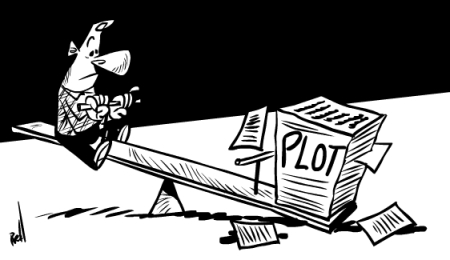
Here's an age-old question in story writing: what's more important, character or plot? Dennis Lehane talked about this last week, and followed that simple question up by saying "Plot without character is an amusement ride. Character without plot is a painting."

And that is so true. Plot and character are linked completely. External events (plot) trigger the internal turmoil that is inherent in your characters, but without the internal turmoil, the plot wouldn't be particularly interesting. In fact, you can build an entire plot based on a great character. But how do you build an interesting character?
One way to start is to think about the room they live in and build out. Consider the contents of their kitchen, their CD player, their book shelves, closet, etc. But although these things round the character out, they don't make the character. What makes the character is their quest for what they want: love, security, fulfillment, value, approval, fairness/justice, etc.
Most of us, when we first start forming our main characters, write someone who is very close to ourselves. You might not want to admit this, but it's true. (Come on, think about your main character, especially who they were in your very first draft. How much did they have in common with you, especially in terms of wants, desires, fears, etc? Probably a lot. Even J.K. Rowling did it, and fully admitted it, with Hermione.) But you lose objectivity in your character, because you can't remove yourself from them. So gradually you write them further and further away from you.
One thing you need to be careful of, something that can make your plot bland and even cliched, is making your heroes too heroic and your villains too evil. (The latter is something I'm struggling with right now.) Because I love HP, and I've already mentioned it, and I think most people reading this blog would get the reference, I'm going to continue with that example. Voldemort is obviously evil and awful. But, there are times in the book when you feel just a little sorry for him, particularly when we see the circumstances of his orphanage. Once we see his upbringing, we understand that he's complex and multi-dimensional. Every time you write about a good character, you need to ask yourself what's bad about them. And when you write about a bad character, you need to ask yourself what's good about them.
I mention all this stuff on character because, as I said before, if you have an incredible character you can create a plot around them. Let's take this list of qualities, totally stolen from an exercise we did with Lehane (the list is from a series of questions we all had to answer, then he drew one at random. These aren't my answers, and sadly I don't have the questions, but you can figure out the questions from the answers):
OK, I'll give you another exercise. Here's another list of traits. Write a short story, or just outline a plot, based on the list below. I copied the answers as they were read, so you can interupt them as you want.
In other news, I'm holding my first-ever contest! You all were such great little followers last week, telling me how wonderful and helpful all my posts were, that I've decided to give away not one but TWO signed books by some amazing authors! Tune in tomorrow for the details! (Hint: You might want to start following me now, before it technically starts, to give yourself a leg-up on the competition...)
Here's an age-old question in story writing: what's more important, character or plot? Dennis Lehane talked about this last week, and followed that simple question up by saying "Plot without character is an amusement ride. Character without plot is a painting."
One way to start is to think about the room they live in and build out. Consider the contents of their kitchen, their CD player, their book shelves, closet, etc. But although these things round the character out, they don't make the character. What makes the character is their quest for what they want: love, security, fulfillment, value, approval, fairness/justice, etc.
Most of us, when we first start forming our main characters, write someone who is very close to ourselves. You might not want to admit this, but it's true. (Come on, think about your main character, especially who they were in your very first draft. How much did they have in common with you, especially in terms of wants, desires, fears, etc? Probably a lot. Even J.K. Rowling did it, and fully admitted it, with Hermione.) But you lose objectivity in your character, because you can't remove yourself from them. So gradually you write them further and further away from you.
One thing you need to be careful of, something that can make your plot bland and even cliched, is making your heroes too heroic and your villains too evil. (The latter is something I'm struggling with right now.) Because I love HP, and I've already mentioned it, and I think most people reading this blog would get the reference, I'm going to continue with that example. Voldemort is obviously evil and awful. But, there are times in the book when you feel just a little sorry for him, particularly when we see the circumstances of his orphanage. Once we see his upbringing, we understand that he's complex and multi-dimensional. Every time you write about a good character, you need to ask yourself what's bad about them. And when you write about a bad character, you need to ask yourself what's good about them.
I mention all this stuff on character because, as I said before, if you have an incredible character you can create a plot around them. Let's take this list of qualities, totally stolen from an exercise we did with Lehane (the list is from a series of questions we all had to answer, then he drew one at random. These aren't my answers, and sadly I don't have the questions, but you can figure out the questions from the answers):
- Passion to learn
- Their eyes wander when they talk to people
- A bit bossy
- Their greatest desire is to be successful
- Wants unwanning drive
- Her sister has broken her heart, and she hurt her sister as well
- She cheated after drinking
- Afraid to fail
- Phobia of heights
- Does volunteer work
- Addicted to alcohol, exercise, marijuna, and tea
- Makes mistakes when she parties and drinks too much
- More than anything, wants to raise enough money to help her parents retire
OK, I'll give you another exercise. Here's another list of traits. Write a short story, or just outline a plot, based on the list below. I copied the answers as they were read, so you can interupt them as you want.
- Most proud of his wonderous humility
- Quirk: lines up Sweet & Low packets
- Snorts, not snores, in sleep
- Hopes for a quick death
- Wants to have their novel published
- His girlfriend's death broke his heart
- He doesn't like people and they know it
- He is afraid of lingering death
- Phobia: ferris wheel
- Once let down someone in need
- Has told big lies to the person he loves the most
- Addicted to cheap beer
- Once beat up a guy in a bar
- Nothing would make his life near-perfect
In other news, I'm holding my first-ever contest! You all were such great little followers last week, telling me how wonderful and helpful all my posts were, that I've decided to give away not one but TWO signed books by some amazing authors! Tune in tomorrow for the details! (Hint: You might want to start following me now, before it technically starts, to give yourself a leg-up on the competition...)
Wednesday, December 30, 2009
Character boards: I'm crafty! (Or just good with scissors and tape)
A few months back, I read somewhere (I can't remember where) about some author (whose name I can't recall) (I'm just full of information tonight, aren't I?) who created poster boards for herself (see! I remembered one detail! The author was definitely a woman) when she was working on a book. The poster boards were full of imagery which reminded her of the book she was working on. For example, if she was working on a book set in Africa, she would pick up a few travel magazines, maybe a National Geographic, and fill up a huge poster board full of pictures of African animals, people, landscape, food, colors that reminded her of her book, etc. It's sort of like creating a song playlist for your book, but with pictures. (If anyone can remember who the heck I'm talking about or where I might have read this, please comment and let me know! I'm pretty sure it was in one of the blogs I follow...hm...)
Anyway, this idea stuck with me, and when I finished my first draft, I decided I wanted to do something similar. You see, I have some complicated locations in my book. The government headquarters is five floors, and Kaia has to navigate her way around with a poorly drawn map. The city/nation/province (I haven't landed on the right word yet) she lives in is about the size of Rhode Island, and throughout the novel we see pretty much the whole thing. But since I totally made it up myself, it's not like I can Google "Where is the closest rail stop to Kaia's house?" or "Is the secret entrance to the government headquarters located on the North or South side of the building?" I knew I would need to draw maps eventually, and with the great idea by the writer whose name I can't remember, I thought it would be good to create character boards, too.
So, what are character boards? Basically, they're an excuse for me to put pictures of this guy up next to me while I write:


Well, hello there, Spanish model Aitor Mateo.
*Drools*
I promise, it's totally legitimate. This guy is channeling Brax majorly. I can't help it that one of my main characters is really, really, ridiculously good-looking.
Seriously though, what I'm doing for my character boards is this: I looked around the Internet for some pictures of people who looked like my characters. In some cases (like Mr. Mateo here *scrolls up to look again*), the people I found looked more or less exactly how I pictured my characters. A non-droolworthy (not to say she's not beautiful, but...have you SEEN the picture up there?) example is Famke Janssen, who looks exactly like how I picture Kaia's mom (even Aitor is not totally perfect for Brax and has a few other pictures next to him). In others, multiple pictures were required. For Kaia, no one is even remotely close, but I still want to try to capture her, so I've got a bunch of sample lips, eyes, hair, and general looks on the board.
Below the pictures, I write any important facts about the character or major adjectives that describe them. Then, as I'm going through and editing the draft, if I have questions about whether or not a character would act a certain way, all I have to do is consult my character board. Does what the character is saying/doing fit their description? If so, it stays. If not, it gets changed or cut. This also works great for when you're first describing a character. Look at all your pictures. If you've got a bunch of skinny girls picked out and taped to your character board, and all of them are probably B cups, but you have your character described as "busty," "voluptuous," or "buxom," then maybe there's a disconnect between your mind's eye and your words.
I don't want to post pictures of my character boards, because frankly you'd probably laugh (although I'm sure one day when I'm super rich and famous they will be of great interest to everyone). So instead I'm going to create a small virtual character board for Kaia's mom. Nothing huge, but just so you get the idea.
Kaia's Mom - m (to indicate she's a minor character)

2 jobs - dishwasher/serving
opposite schedule from Kaia - never home together
married young
strong, independent
coped well with death of husband
no family left aside from Kaia
no family left aside from Kaia
intelligent
very motherly but doesn't have time to notice as much as she should (she's an absent parent!)
etc., etc.
You get the idea. It was nice to take a few days to work with my hands, exercise a different part of my brain, but still get to know my characters and my world. But I started editing again two days ago, which I guess is almost as fun as looking up pictures of hot guys on the Internet...almost.
Sunday, December 27, 2009
In which Heather plays catch-up
I didn't mean to take a break from blogging this week. It just sort of happened. I usually write my posts late at night, or on my lunch break at my day job, so since I wasn't really turning on my computer, and I haven't gone to work in 4.5 days, I haven't blogged in awhile. Oops.
I do have a lot to share, though! I'm going to write everything out in a list, because I love lists.
1. It's Sunday, so I feel like I should start with Sunday Funday. A lot of people were on hiatus this week, but there are two epically awesome posts that I need to point out: Shannon's story that she wrote when she was 11 (Earth Had a Snack) and Frankie's untitled story she wrote when she was 10. Both of them are awesomely hilarious, and even better they started a blog war! You should also read this fun post at Book Dreaming, which highlights some quality student writing samples (and enter her contest while you're there!)
2. OK, the big news: I FINISHED MY FIRST DRAFT!!! Woot! This actually happened a few days ago (almost a week, in fact), and I tweeted about it (reason number 900 why you should follow me), but, as I said before, I haven't had a chance to post here in awhile. So I took a few days off to let it sit and remove myself from it a little (and stuff myself full of lasagna, cinnamon rolls, and creamed chip beef). Then today I went out and bought some poster board so I can make character and location boards. I'm going to diagram the important locations so I can keep all the mapping straight as I edit, and write out character traits and find pictures of the people who look like my characters. It will provide me some happy inspiration as I edit.
3. I got the pieces from the other nine writers for my conference in January. I have to say, at first I was a little intimidated. Some of the titles are incredibly literary, and the topics are serious and arty. I'm the only YA author in my group. (There are three groups, each with ten writers, and I know that at least one of the other groups has a YA author in it because I know her.) I hyperventilated a little, thinking that I would just be a failure at life. Clearly, everyone was going to mock me, I was going to be the joke of the conference, and all of my writerly dreams would be shattered into a million little pieces.
Then I realized I was being ridiculous. Not only did I get into the conference, but I got a scholarship. Clearly, they want me there. Maybe it's the very fact that I bring something different to the table that made them pick me. But no matter the reason, I obviously deserve to be there. Also, once I started actually reading the WIP samples, I felt a LOT better. They were great samples, but I felt like my writing was on par with theirs (considering that mine is YA and theirs isn't). So I'm back to looking forward to it!
4. My friend put together an art show, and I agreed to do PR for her. But then one of the artists dropped out, and she asked me to record some of my writing (they have headphones so visitors can listen to audio), and maybe even display it. I'm pretty excited, but I'm also kind of freaking out. I mean, this is an ART SHOW. So my little YA WIP wouldn't be appropriate, even if I did feel like I wanted to display it. I've decided to write a 2,000 word short story. I want to go for the literary fiction genre, because I think it will be fun to try something new, and that will probably appeal to the people who are at the show the most. I have some ideas, but I'm still nervous....eek! We'll see how it goes, though.
So I guess that's it! That's what I've been up to since Tuesday. Riveting, I know.
Tuesday, December 1, 2009
Tu Publishing - Bringing multicultural awareness to the masses
As a white female, I never thought much about the ethnicity of the characters in the books I read. (Although, interestingly, I do love a book with a strong female lead.) Obviously in the books where race really matters, like To Kill a Mockingbird or Invisible Man, it was a consideration. But if I'm just reading a book, I don't really care about the race of my main character. I'll just picture them as the author describes them, usually with a few modifications of my own (for example, no matter how hard I try, I can never remember to make Remus Lupin look run-down. He always looks too handsome in my head.), but I don't think about the bigger issue of race.
Then, a few months ago, I read about Justine Larbalestier's YA novel Liar. I would never assume that everyone reading this blog is familiar with the situation, so I'll sum up here. Basically, the protagonist in the novel is described as "black with nappy hair which she wears natural and short." The cover that the publisher came up with was this:

Uhm, right. Because that chick totally looks black.
Another interesting issue, apart from the fact that this was an inaccurate depiction of the protagonist, is that the character is a pathological liar, and you apparently spend the whole book wondering what is true and what isn't (for the record, I can't wait to read this). So, if the reader sees a white person on the front cover, but inside the book the character describes herself as black, but she's a liar...woah. Fortunately, thanks to some amazingly powerful blog entries by the author and others in the blogging world, the publisher changed the cover, and you can now buy this at stores everywhere:
 Better. But the interesting thing about this whole issue is that this character's race isn't really an important plot point (not having read the book yet, I can't confirm this, but I'm almost positive). So this was the first time that I started thinking about race in books when race wasn't really an issue. Then I started thinking...
What if I was a minority, with so many of the books I read featuring white main characters? Would I think about it? Would it bother me?
That is why the new publishing company, Tu Publishing, is so great. They are a house geared specifically toward books that are fantasy or sci-fi YA novels with multicultural main characters. Amazing. Not only do I think this could encourage more people to incorporate multicultural characters into their novel, but it could also mean that books with minority characters have a better shot of getting published.
Unfortunately, Tu Publishing hasn't started quite yet. They need some help getting off the ground (namely, money). If you want to help their effort, visit their Web site, and make a donation.
And to learn more about writing outside of your cultural group, read these blog entries by Justine Larbalestier (who's white, so there's no excuse for you...or me).
Thursday, November 19, 2009
Emotionally drained
I am dying to tell someone what I wrote last night, but in the wild fantasy world in which I live, my book will one day get published and become an international best-seller, so I don't want to spoil the surprise. But I can say that writing the scene was one of the most emotionally draining things I have done in a long time.
When I was deciding what to write for NaNoWriMo, my initial story idea was based loosely on my own life. Ultimately, I decided not to write that novel, mostly because I liked my new idea better. I also strayed from my original plan because I knew it would be too hard to revisit some of the things I would have to write about. Some day, I'll go there, but not now. Little did I know that my future dystopian YA would end up being difficult, as well.
I wrote the section in question in the car on the way home from my friend's house. My husband was driving, and I warned him that I was about to write something hard.
"Are you going to cry?" he asked.
"I might."
Pause.
"Just, don't."
"You don't understand, husband. These characters are mine. I've always known my plans for them, but that doesn't make it any easier. Also, if I get emotional over it, maybe readers will, too."
Pause.
"Just, don't cry."
My husband got his wish, and I didn't cry. But I wanted to. It was still difficult. Writing can take a lot out of you. It can knock you off your feet and take the air out of your lungs. It can leave you up until 2am, struggling to come up with the perfect word when you know that none of the 25 you've written so far feels just right. But in the end, you've written a beautiful story, and all the sleepless nights and tear-filled days are worth it. (I just hope a publisher thinks so, too.)
Sunday, November 15, 2009
Halfway there!

Tonight, I hit 25,279 words for my NaNo.
WooHoo!
My hands ache a little, and I definitely lost a lot of time revising my first 25 pages for the Writer's in Paradise workshop. But my submission is more or less ready (I have some final edits left), so no more time should be wasted editing pages. Just writing my little heart out.
The hardest thing I'm coming up against right now is what to do with one of my characters. I've got him in a situation, and there are only two outcomes if I want everything else I've written so far to be believable (and I would very much like that to be the case). One outcome seems to be more logical, but from the way the people who read my first 25 pages reacted to this character, I don't think my readers would love it. The other outcome might ultimately make the reader happier, but I'm afraid that it sticks me with some big problems. It also might give me more plot fodder, which would be great, just in case I need it. However, I'm afraid of doing too many things that have been done before. But I guess there's a reason those things have been done before - they work. They make readers, agents, and publishers happy, and they sell books.
I think either outcome would be fine with me - either way I'll have written something interesting, and I could definitely see both solutions being plausible. The only reason I didn't write more tonight is because I'm trying to figure out what to do with this character. I better decide tonight, because I want to get ahead of my word count again so I can finish my novel by the end of November! (I think this novel is about 65,000 - 70,000 words, not just 50,000, so even though it only takes 50K to win NaNo, I'd like to finish the book by the end of the month.)
Subscribe to:
Posts (Atom)