I mentioned before that while I was in Vermont, I had the first 20 pages of my brand-new shiny WIP workshopped. I didn't mention that I also had one of the grad assistants, a published middle-grade author, take a look at it. She offered me some excellent feedback, particularly because I was able to tell her exactly what I was most concerned about in the piece and ask if this or that was working.
There is one character in my new project that I had particular reservations about. The character is sort of an antagonist to my main character, and I was afraid that by her very nature she would offend and alienate an entire group of people, thus making those readers hate me, my book, and any subsequent book I would publish (dream big, readers!). The GA said that was a possibility and offered a few suggestions for how I could fix that. Then, she said something that kind of blew my mind:
"But I wonder...do you even need this character at all?"
I have stacks of notecards on my end table outlining the plot of this book, giving character descriptions, linking emotional through-lines and explaining how the subplots interconnect. So as I sat in this teacher's lounge, the snow pummeling the ground outside the window, my mind flipped through all those cards, and I could not for the life of me think of one actual reason why I truly needed that character. She had some great one-liners, and she provided a nice thwart to my main character in the first few chapters. But in terms of the big picture, I didn't really need her. I had a few plans for her, but ultimately, the book could stand just fine without her.
Sometimes it's hard to see these things in the first draft. Heck, it's hard to see these things in the second, third, or fourth draft. But it's important to ask yourself, with every single character in your book -- "Does this character NEED to be here? Is he/she essential to the plot?" This is one of the things people are referring to when they say "Kill your darlings." Related to this question, but still just as important: "Could this character's role be fulfilled by another character already on the page?"
We've all read books where there are so many minor characters it's hard to keep them straight. When the author gives each character specific, essential roles and individual character traits, it's not really a problem. Our minds can keep track of these characters because the author has done such an excellent job keeping them apart, giving them their own unique role both in the plot and in the world created within the book (Anna and the French Kiss is a recent example of a book that I think does an excellent job of giving even minor characters important roles and individual characterizations.) But when there are too many unnecessary characters, it's easy for the reader to become frustrated -- particularly if they're having to flip back pages to see who is related to whom (which I've had to do before -- lame!)
On the flip side, there is the danger that if you only show the part of the characters that is essential to the plot, or if the characters only pop up when they're absolutely necessary, the characters will become, to borrow an (admittedly adult) term I learned at VCFA, your "plot bitches," there to serve you and only you, to move your plot forward and nothing else. Characters need to have lives of their own, and if they're popping up conveniently only to serve your plot and retreating into the shadows, waiting to strike again when the plot thickens...well, that's no good either.
As always, writing characters that are essential the plot but still have lives outside of it is a delicate balance.
If only this writing thing were easy.
Showing posts with label editing. Show all posts
Showing posts with label editing. Show all posts
Saturday, January 29, 2011


Saturday, November 13, 2010
Eavesdropping for Action!
I think I've mentioned before what an effective tool eavesdropping can be for getting authentic dialogue. That's not to say that you should include, verbatim, every conversation that you hear, but heading down to the mall and just listening to the way teens (or adults, if you don't write YA) talk to each other can really help you write more authentic dialogue. Take the best of the best of what you hear and stick it in your book.
But lately, I've started a new (and much creepier) kind of eavesdropping - observing for emotional action. As I go through my MS, I'm focusing on getting rid of any of the instances of "telling" and making them all "showing" - for a basic example, changing something like "fear rose up in me" to "a chill ran up my spine." Taking the actual emotional word out of the phrase and focusing instead on how the emotion makes the character feel - the character's physical reaction to the emotion - makes some of the bumpier scenes better.
Usually, I get the ideas for emotional reactions by thinking about how I would react in those situations. I close my eyes and imagine a time when I was scared, or happy, or nervous, then think about what my body was doing. Of course, that doesn't always work because 1. I'm not my characters, and we don't react the same way, and 2. Eventually, I run out of reactions, since I tend to do the same things. So I've started looking at the way people react physically as well as their dialogue.
And I'm getting so much great material!
Yesterday, I was in my local Super Target grabbing a coffee, and two women nearby were discussing the recent divorce proceedings one of them had gone through. They were going through the judge's or lawyer's report line by line, reading it out and reacting to (and dishing on) and it said. (Why they chose the cafe in Super Target to do this? No clue.) It was fascinating to watch, because things had obviously gone in the woman's favor - she was jiggling her leg, clasping her hands in front of her smiling mouth, and looked as if she were going to explode out of her chair at any second. I took my time pouring my cream and sugar into my coffee so I could watch their excited reactions and make a mental note of their physical clues, then when I came home I wrote the actions down in my writer's notebook. Now, when I need a character to act happy or excited, I can refer to my list, and maybe, if it fits the character, she'll be modeled after the woman in Starbucks.
So, yeah. I'm a creepy stalker. But hey. It's for art. And it totally works.
Saturday, July 3, 2010
Revisions and Reading Aloud
A few nights ago, my husband had a stomachache. He always prides himself on being someone who "never gets sick," and mocks me endlessly whenever I get sick. But as he was getting ready for bed, he started getting queasy, and a few minutes later he was curled up in a little ball on our bed, practically crying. This makes me giggle a little because he's a third-degree black belt, and he's so pathetic when he's sick that he turns from this guy:

Into this guy:

So hubs is there, curled up and whining, and I offered to rub his back and read him a story. I had a ton of picture books at the time since I've been reading them for VCFA. But since I was trying to put him to sleep, I knew I needed to keep it dark in the room. So, for the first time ever, I pulled out my MacBook and read hubs the first chapter of my WIP.
I have to say there is nothing that will bring out the flaws in your manuscript than reading it aloud. Suddenly, all those repeated words, adverbs, and awkward phrases will jump out when you're actually saying the words. Since I was reading the story to someone else and wanted him to actually enjoy it, I had to prevent myself from stopping mid-sentence and editing out the words I thought didn't work. It was SO hard! As a writer, whenever you realize that something isn't working, you want to fix it as soon as possible. But I held back, though I vowed to read the chapter aloud to myself again at another time. I'd heard of people doing this before, but I'd never done it myself.
In the end, hubs enjoyed the chapter. His stomachache was gone in the morning. And I came up with an excellent way of revising my WIP. So if you've never read your MS aloud to yourself, I definitely recommend you include that as part of your revising process. I thought my first chapter was more or less done - but reading it aloud helped me find those last few places that were especially weak. I read the chapter aloud to myself last night and let myself stop to mark the things that needed to be fixed. The words flow much more naturally, and I think, finally, chapter one is done. Hopefully the rest of the book will be done by the end of the month (eek!). The very last thing I'll do before I consider the book completely finished will be read it aloud, start to finish, without stopping.
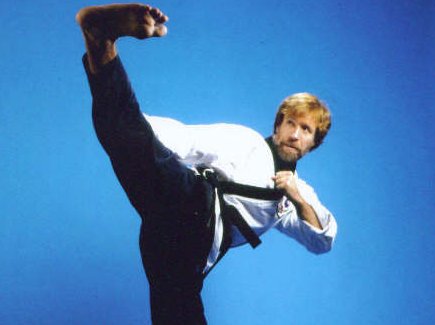
Into this guy:

So hubs is there, curled up and whining, and I offered to rub his back and read him a story. I had a ton of picture books at the time since I've been reading them for VCFA. But since I was trying to put him to sleep, I knew I needed to keep it dark in the room. So, for the first time ever, I pulled out my MacBook and read hubs the first chapter of my WIP.
I have to say there is nothing that will bring out the flaws in your manuscript than reading it aloud. Suddenly, all those repeated words, adverbs, and awkward phrases will jump out when you're actually saying the words. Since I was reading the story to someone else and wanted him to actually enjoy it, I had to prevent myself from stopping mid-sentence and editing out the words I thought didn't work. It was SO hard! As a writer, whenever you realize that something isn't working, you want to fix it as soon as possible. But I held back, though I vowed to read the chapter aloud to myself again at another time. I'd heard of people doing this before, but I'd never done it myself.
In the end, hubs enjoyed the chapter. His stomachache was gone in the morning. And I came up with an excellent way of revising my WIP. So if you've never read your MS aloud to yourself, I definitely recommend you include that as part of your revising process. I thought my first chapter was more or less done - but reading it aloud helped me find those last few places that were especially weak. I read the chapter aloud to myself last night and let myself stop to mark the things that needed to be fixed. The words flow much more naturally, and I think, finally, chapter one is done. Hopefully the rest of the book will be done by the end of the month (eek!). The very last thing I'll do before I consider the book completely finished will be read it aloud, start to finish, without stopping.
Thursday, May 20, 2010
Why Home Decorating is Like Writing, Part One
I have a confession: I have another hobby.
I know. It seems totally impossible that someone with no time to sleep actually has time to consider doing something aside from writing in the few waking moments that she has, but, what can I say. I like to torture myself. Anyway, lately I've been getting into decorating and renovating my house. Since I'm on a serious budget (and I mean serious) all of my "new" decor is really stuff I find in thrift stores or consignment shops and fix up to display in my house. And every time I go through the process, I can't help but be reminded of the writing process.
Take, for example, the lamp I recently found at my local Salvation Army. I'd been looking for a good lamp for weeks, ever since I refurbished an adorable end table and decided it needed a lamp to sit on top of it. I wanted one with a nice, interesting shape, but also one that wasn't totally huge. Finally on my third weekly visit to the store, I found the perfect lamp. It was just like searching for the perfect idea for your next novel - I didn't know what I was looking for, in particular, but as soon as I saw it I knew it was the one.
I really wish I'd taken a before picture, because this thing was pretty hideous. Much like the first draft of a WIP, it had great bones, but it was speckled with awful brown spots, almost sponge-painted on. Just terrible, classic thrift-store tacky. But after some primer, a can of yellow spray paint, and an incredibly adorable (and possibly too girly for my husband's tastes) shade from Ikea, I transformed my thrift store find into this:

It's so cute I want to die a little. And it just took a little bit of revision, and the ability to look beyond the hot mess of what the lamp was and see what it could be. (If that doesn't remind you of the writing process, I don't know what does.)
But then, as I was putting the final touches (literally, the very last spray) on my lamp, disaster struck. I got a little overzealous, came a bit too close with the paint can and bam! Drip city. Oh noes! What to do? Hm...what would a writer do when there's a plot problem that seems a little bumpy? Research! So I did a Google search for "Removing spray paint runs" and found some useful information. Since my runs currently look like this:

It's obvious I have a little more sanding, then some painting to do before I can finally display my lamp for all the world to see. But if writing's taught me anything, it's that revisions are a long and painful process, so waiting a week to show off my adorable lamp hardly seems difficult.
The best part about doing all these little paint jobs (including a totally botched dresser and nightstand set, which may make up part two of this post) is that painting really lets me clear my head and think - and whenever I'm thinking, my brain always turns to my WIP. Some of my best ideas have come to me while I'm refurbishing something, or browsing the aisles of the thrift store. So even if this new decorating craze has taken some time away from my writing here and there, in a way it's also helped me connect to it again.
Tuesday, May 4, 2010
That Thing You're Not Supposed to Write About
It's in all of our WIPs. We know it's there, lurking in chapter three, hiding out at the end of chapter 17, waiting to pounce on unsuspecting readers. All of us have it, but many of us leave it in there anyway, at least in early drafts.
What is this? It's the Plot Device You Know Isn't Working, and it has to go. (PDYKIW for short. I tried to come up with a catchy, hilarious nickname that would go viral and ultimately earn me fame and fortune in the online writing world, but my brain is off today.)
But does it have to go?
I had a PDYKIW. When I first came up with it, I thought, "This is kind of cool!" Then I came up with a host of issues.
And why would I ever want my CPs to tell me something isn't working? Because then they can help me figure out what will work.
Some people get their crits from their partners, read them, and accept or reject changes based on their whimsy. I'm not one of those people. I annoy the heck out of my partners. I send them emails at 2am that might say things like, "I had a dream last night that Kaia should have a purple, mustache-sporting elephant for a sidekick. Thoughts?" (OK, that's extreme. But the 2am emails are real. And they are looooong.) I also use them to help me work through the PDYKIW. Because after 25 1,000 word emails (OMG, that's half a book! I'll call it "Letters to My Crit Partners"), the Plot Device You Know Isn't Working turns into the Plot Device of AWESOME. (Which is also a way better acronym.)
So don't be afraid of the PDYKIW. Leave it in, and let your crit partner read it. Or just email them about it (though I think reading it in context is sometimes more effective then trying to describe everything...just my opinion.) Because you might have something AWESOME hidden underneath it.
P.S. I apologize for the over-use of parenthesis in this post. I can't even begin to focus tonight.
What is this? It's the Plot Device You Know Isn't Working, and it has to go. (PDYKIW for short. I tried to come up with a catchy, hilarious nickname that would go viral and ultimately earn me fame and fortune in the online writing world, but my brain is off today.)
But does it have to go?
I had a PDYKIW. When I first came up with it, I thought, "This is kind of cool!" Then I came up with a host of issues.
- Is this even technological possible?
- My presentation is way too abrupt. (I believe the exact words I thought were "dues ex machina." I even described it to the hubs, and asked whether he thought it was. He did. And he hardly reads fiction.)
- People (in the world of the book) would have realized this already. No one is that stupid.
- Etc.
And why would I ever want my CPs to tell me something isn't working? Because then they can help me figure out what will work.
Some people get their crits from their partners, read them, and accept or reject changes based on their whimsy. I'm not one of those people. I annoy the heck out of my partners. I send them emails at 2am that might say things like, "I had a dream last night that Kaia should have a purple, mustache-sporting elephant for a sidekick. Thoughts?" (OK, that's extreme. But the 2am emails are real. And they are looooong.) I also use them to help me work through the PDYKIW. Because after 25 1,000 word emails (OMG, that's half a book! I'll call it "Letters to My Crit Partners"), the Plot Device You Know Isn't Working turns into the Plot Device of AWESOME. (Which is also a way better acronym.)
So don't be afraid of the PDYKIW. Leave it in, and let your crit partner read it. Or just email them about it (though I think reading it in context is sometimes more effective then trying to describe everything...just my opinion.) Because you might have something AWESOME hidden underneath it.
P.S. I apologize for the over-use of parenthesis in this post. I can't even begin to focus tonight.
Thursday, March 25, 2010
Does It Ever End???!!!
I recently finished round one of revisions.
Wrong. Let's not break out the dancing banana, folks. I've still got about 7,000 rounds of revisions to go. I've got a whole lot of mess in my manuscript, some problems to deal with, and then there's my crit partners...what will they think?
I'm starting to think that this whole revision process will never end. You get little milestones along the way, sure...hooray, I finished the first draft! Hooray, I reached the end of the novel! But there's always more to be done. In fact, I've created an awesome MS paint rendering of the CYCLE OF REVISION to show you how it really is never-ending:

OMG my arrows are so perfect.
Notice that revision is on there TWICE, and that's just in one round. You write the book, you read it, you see some problems, so you revise. Then you let the crit partners read it, and they see lots of problems, which require major rewrites and revisions. So you revise and write again. Then you read, and notice more problems, so you revise. But by now, your story has changed a lot, so you send it to your crit partners, who make suggestions (maybe not as many as before, but still a lot), which require revisions and rewrites, and on and on ad infinitum. Right now I feel like I'm tumbling around in circles and will never, ever get my story finished. *sigh*
But, eventually, it will be shiny and sparkly. It will be so shiny and sparkly, in fact, that it will be ready for the next cycle: the agent/editor cycle! This cycle is way less predictable, and therefore can't actually be cyclicle:

More perfect arrows! You guise, I win the arrow-drawing competition.
So you're querying, and you get some feedback - maybe that feedback is in the form of constant rejections, or maybe it's actual feedback. Either way, you know something isn't working. So you revise. And you keep querying. Then you get an offer. Squee!!!!!!!! And your shiny new agent has notes on 26 of your 27 chapters. So you revise again. Then you go on sub, and guess what??? A publisher loves it!!! Except for chapters 3, 8, 9, 12, 13, 16, 17, 22, and 27. Also, your main character should have a dog. Also, your love interest is too ugly, he needs to be cute. Also, a main character from the planet Zortab will never sell at Flourish and Blotts bookseller, because the CEO has a morbid fear of the letter "Z," so change that.
But then, finally, after all that, your book is published. Your name is on a glossy dust jacket beside the likes of (insert your favorite author's name here...I didn't want to leave anyone out.) All of the months and years of revising and making up awesome MS paint renditions of revising maps were totally worth it because you have a writing career.
Well, sort of. At least, you'll have a writing career when you start on that next book. You just have to write it, then read it, then revise it...
Honestly, though, I do get discouraged and exhausted sometimes. But at the end of the day, that big pink PUBLICATION keeps me going. If there is even a chance that I could make my dream come true, it's totally worth it to me. I'll revise until my fingers bleed and my eyes get fuzzy from staring at my computer screen, just as long as I get the chance to make this happen.
So, just how shiny can I make my MS? Let's find out...*dives into round two of revisions* (I fully expect to lose count of my revision rounds at some point, by the way. I've already lost count of the number of times I've revised the first 25 pages.)
Monday, March 22, 2010
The Revision Tango
Today, I got my much-anticipated feedback from the lovely Weronika Janczuk's query and 10 pages contest. It was a mixed bag of notes - some positive things, a lot of suggestions for things to improve, but overall I feel really great about what she suggested. It's totally manageable, and I feel completely capable of handling the revisions she's suggested for me. (For the MS anyway. Query wrangling is another story...but I still have time on that one.)
One notable comment she made was that, at one point, she wasn't quite sure what was going on, and she wanted a little more background about the world and where Kaia was coming from. I couldn't help but smile when I read this, and think back to the first major set of critiques I ever received...at my conference in January, where three of the ten people reading my pages said there was a little too much info dump and that I needed to take some of the background stuff out and integrate it throughout the chapter a little better. So I took their advice and cut out the background stuff.
Apparently, I went a little too far.
 Fortunately, this is a relatively easy fix. I know my world. I have notes on it, and I saved my deleted scenes - although my writing has grown so much since January none of those words would make it in as-is. Still, this whole revision process reminds me of a complicated dance - a tango, if you will. Just when you think you've taken all the right steps forward, you have to take three steps back.
You need to dance with the words. Play with them on the page until the feel right to you. Then let someone else take them out for a spin and see how they feel. Do your words make for a smooth partnership? Or are your readers going to be left confused, dancing with two left feet?
Sometimes, you'll do something to your WIP, and you'll be convinced that it's the right decision. You might cut a great scene - or leave one in. But when you step back and look at the book as a whole, maybe that one decision - that small bit of choreography - throws off the rhythm of your entire project. Instead of waltzing along a moonlit path, suddenly, with just two or three sentences - or even words! - your book is doing the Macarena. (And this is sooooo not 1998.)
So don't be afraid to dance with your book. When you add a few steps in, look at it as a whole and make sure it still works. And know that sometimes, the dance has to start over again, and the steps you took out need to get put back in.
And, just for fun, because this video is totally awesome, and I once saw this guy perform live at a sorority convention (OMG yes I was in a sorority, no judgment - in fact, I was the president, because I was awesome.), I give you The Evolution of Dance:
One notable comment she made was that, at one point, she wasn't quite sure what was going on, and she wanted a little more background about the world and where Kaia was coming from. I couldn't help but smile when I read this, and think back to the first major set of critiques I ever received...at my conference in January, where three of the ten people reading my pages said there was a little too much info dump and that I needed to take some of the background stuff out and integrate it throughout the chapter a little better. So I took their advice and cut out the background stuff.
Apparently, I went a little too far.

You need to dance with the words. Play with them on the page until the feel right to you. Then let someone else take them out for a spin and see how they feel. Do your words make for a smooth partnership? Or are your readers going to be left confused, dancing with two left feet?
Sometimes, you'll do something to your WIP, and you'll be convinced that it's the right decision. You might cut a great scene - or leave one in. But when you step back and look at the book as a whole, maybe that one decision - that small bit of choreography - throws off the rhythm of your entire project. Instead of waltzing along a moonlit path, suddenly, with just two or three sentences - or even words! - your book is doing the Macarena. (And this is sooooo not 1998.)
So don't be afraid to dance with your book. When you add a few steps in, look at it as a whole and make sure it still works. And know that sometimes, the dance has to start over again, and the steps you took out need to get put back in.
And, just for fun, because this video is totally awesome, and I once saw this guy perform live at a sorority convention (OMG yes I was in a sorority, no judgment - in fact, I was the president, because I was awesome.), I give you The Evolution of Dance:
Friday, March 19, 2010
Writing a Novel is Like Playing the Lotto
Hello, blog-followers!! Let me start off by apologizing for my extended absence. For the past several days, I was holed up in bed, stuck in a sweaty, fever-induced cocoon of sickness that looked something like this:


Image source. I tried to make a hilarious Paintbrush rendering of my state, complete with sweat and stinky sick breath, but apparently those renderings are really hard! I have a much greater respect for people who can master hilarious MS Paint art now.
Anyway, now I'm fully recovered...or at least recovered enough to update my blog, which is really all you people care about anyway.
While catching up on my emails (98 missed emails in 3 days...wow!), the hubs came over and handed me his lotto ticket. He asked if I could please check the numbers when I got a chance.
Every time he does this, I get a little frustrated. It's not like we have a lot of money, and I always think - what else could that four dollars buy that would show measurable results rather than this gamble of a lotto ticket, which literally has a 1 in 20,358,520 chance of wining (which I know because I looked it up)?
But as I'm waiting for the flalottery Web site to load, I still get a little squirm in my stomach...what if we win?? I could probably quit my job and write full-time, at least for a little while. Or at the very least I could pay off all my debt and not have so much pressure to work as much. I could buy as many books as I wanted, and build a giant home library. I wouldn't have to worry about how I'm going to pay for SCBWI-LA - I'll just pay for it.
This excitement is the only thing that has kept me from telling the hubs not to waste his money on lotto tickets anymore. He doesn't buy them every week, so if he wants to pick them up once in awhile, so be it.
Today, I couldn't help but be reminded of the publishing industry, and how writing a book is a little like playing the lotto. You dedicate months, possibly years of your time to writing. You shun parties and social events. You pay to attend conferences and get to know crit partners. You pour your heart and soul into a book...what happens if it never gets published? Does that mean it doesn't matter? Was all of this time poorly spent?
I definitely don't think so. Even if you query away and no one bites, you've still learned a lot just throughout the writing process. I'm a firm believer in the philosophy of "the more you write, the better you become," so even if your novel is never published, you've still learned plenty to get started on your next one. Plus, unlike the lotto, there are many factors in the writing process that you can control - talent and craft and industry knowledge. If your gamble isn't paying off, maybe you need to just reevaluate your hook or tweak your query. Or maybe the first half of your book is great, but something isn't clicking in the ending. The point is, though you can't change your lotto numbers, you can revise your novel every minute until it gets published (though you might want to avoid changes in the page proof stage - it tends to piss publishers off because it's so expensive...though I did learn that Dennis Lehane doesn't really care about that rule and will submit changes right up to the day the book is printed, expenses be damned.)
Obviously, we haven't won the lotto - yet. And I haven't had my book published, either - yet. But I'll let the hubs buy his lotto tickets, and I'll keep revising and perfecting my book until I think my gamble isn't so much a gamble as it is a safe bet.
Thursday, March 11, 2010
Heather's No-Nonsense Guide to Common Grammar and Usage Foibles

Today's post is about grammar and usage. Now I'll admit I'm not totally perfect in my usage - I've been known to utter an OMG or two (thousand), which I'm pretty sure isn't actually grammatically correct (especially since I'm 25). And I couldn't tell you the differences between a past participle and an infinitive verb. I know, so you're thinking...how are you even qualified to give any kind of guidance on grammar?
I'm a journalist and magazine editor. A large part of my job is to turn the crap that gets turned into me by amateur writers and non-writers and make it readable. But when I was in college, my copyediting teacher didn't bother explaining to us the different terms for the parts of speech (granted, we probably should have remembered these things from high school). What he did do was give us little tips and tricks to help us remember the biggest, most irritating, and most confusing mistakes that people often have a hard time with. And today, I'm going to share some of those tips with you. Some of them are pretty basic, but I hope you'll get at least a little something out of it (or, at the very least, enjoy the hilarious clip from The Office that I'm going to include).
Me vs. I: This is a big one, and something that your parents and teachers probably corrected you on all the time. You might have said to your mom, "Hannah and me are going to the mall to scope out hot boys." And your dad said, "Hannah and I" and you rolled your eyes and left anyway. The me vs. I issue comes up all the time, but fortunately there's a very simple way to figure out if you should be using me or I: simply take out the other person from the sentence. In my earlier example, you wouldn't say "Me is going to the mall to scope out hot boys." That doesn't make sense. So you know that it should be I. But, if you were going to say, "The cute boys at the mall bought sodas for Hannah and me," that's correct, because you wouldn't say, "The cute boys at the mall bought a soda for I." Got it?
Who vs. whom: I love this one, mostly because of this video (which contains the correct usage explanation, but mostly it's just hilarious):
OK, so...it's who when's the subject of the sentence and whom when it's the object. But what does that really mean? And if you're not sure, do you really want to spend the time to think about it that hard? No? So here's the little trick I use: if you want to know whether who or whom is correct, simply replace the whom/who with him/he or them/they. (I like to use him or he since him, like whom, ends in "m," but you can also use she/her.) Sometimes this requires altering the word order a little, but the trick still works. Check it out:
Who is that totally hot girl? (Is she that totally hot girl?)
The dancers, four of whom have pink hair, look just like Cyndi Lauper. (Four of them have pink hair.)
Everyone differed as to who they thought had the best bow-fighting skills. (They thought he had the best bow-fighting skills.)
Sarah is dating a boy whom she met at a dive bar. (Sarah met him at a dive bar.)Affect vs. effect: I still struggle with this one and have to take the time to really think about it. Affect is a verb, and effect is a noun, but both can technically and occasionally be either. In general, though, effect is just a noun, and affect is just a verb (unless you're talking about affect, the emotion...so just remember that as the exception). And what's the easiest way to tell if you're dealing with a noun or a verb? Stick an article in front of it. If the sentence needs (or can have) an article, use effect. Otherwise, use affect.
The effect of the alcohol was slow. ("Effect of the alcohol was slow." doesn't make sense.)
His ability to dance well will affect his role in the school play. (His ability to dance well will THE affect...what? That makes no sense.)
His ability to dance well will have an effect on his role. ("An" is also an article, so in this case, use effect.)
She wanted to effect change on the world. (Annoying exception No. 1: effect meaning "to change")
He displayed a happy affect. (Annoying exception No. 1: generally only used in psychology, and best left alone.)Peak vs. Pique vs. Peek: I'm going to go ahead and assume you all are smart enough to figure out to/too/two and their/there/they're, but this is one that I see used incorrectly all the time, especially at work, so I thought I would give a little refresher. I also see agents complaining about it a lot, so I know it's a problem in the noveling world. Peak means top, like a mountain peak. Peek means a glimpse, or to see. Pique is a French word meaning to stimulate or tempt. I use those words specifically to help you remember the difference between peek, peak, and pique:
Peak -> mountain -> both have an "a" in them "Heather's MS is so fabulous, she will rise to the peak of YA writers in no time!"
Peek -> see -> both have an "ee" in them "I can't wait to get a peek at Heather's MS!"
Pique -> tempt -> both have five letters "Wow, Heather's query is so great, it's piqued my interest in a full MS!"Trust me, I could go on and on, but those are some of the main ones I see. I hope you learned something!
Are there any grammar or usage rules that you struggle with? Or are there any that you see misused often that really irritate you?
Tuesday, March 9, 2010
I Love Making Out
That's right, you heard me....er, read that. I LOVE making out.
Well, I love writing about it at least.
Today, I was revising some chapters and I discovered a TOTALLY SECRET MAKE-OUT SESSION which two of my characters apparently decided to have, then forgot to tell me about. (Actually, I wrote it in the first draft when I was clearly half asleep, which was evident because I used "and" when I meant "had" and "if" when I meant "is" and other sound-alike changes that I always do when I'm starting to get too tired but am dying to type out just one...more...sentence. I guess my sleep-deprived self decided to let the characters OMGTOTALLYMAKEOUT, and then I forgot about it the next morning...until I read it today.)
The thing about this kissing scene, though, is that I decided a few weeks ago to take out all the kissing scenes between these two characters, and save them for the next book. For reasons I'm just not going to divulge here because I harbor delusions that you all care about spoilers or will even remember these tidbits when my book is published, I decided it was best to keep these two apart for the time being. But as I was reading it, not knowing that I had written a kiss in, thinking it was just a tender moment, I kept thinking to myself, "Oh, man, it would be SO PERFECT if they kissed here!!" And then BAM! They do! And it is kind of perfect, actually, even if it's maybe not totally right.
 I thought about taking it out. Part of me still thinks I should. I'm telling that part of me to shut it right now, and will see what my crit partners think when I hand it over to them. Because the fact of the matter is, I love kissing scenes. I love reading them and I love writing them. I love that moment when you know there's going to be a sexy kiss and then it totally happens and you just want to smile and jump for joy. I love (to hate) the moment when you think there's going to be a sexy kiss and then it doesn't happen for reasons tragic or just plain embarrassing. I love the way I get all tingly inside when people are kissing on the page and I'm rooting for them because I knew all along it would happen, or because I never guessed it would. Kissing is awesome.
When I write kissing scenes, I try to think back to the great kisses in my life and describe them on the page to make everything sound more authentic. Then I might go through and change things to protect the innocent. I also have distinct kissing styles for each of my characters. One guy kisses and tastes a certain way, and the other kisses and tastes a different way. I have to make sure they are distinct and match the character, otherwise things are just going to get boring. And no one wants to read about (or participate in) boring kisses.
Writing kissing scenes can definitely be tough. When I emailed a group of writing friends about finding my super-secret kissing scene, I got a very diverse reaction about how much they loved - or didn't love - writing kissing scenes. And just because you enjoy writing about kissing doesn't make you instantly good at it (kind of like kissing itself...) One of my crit partners pointed this out to me. (Not because I was kissing her! Get your mind out of the gutter, people, and read on.) I sent her a chapter from my WIP to look at, a scene that involved some sexy kissing. I wrote about (among other things) sloppy kisses and raw lips, and overall I thought the scene was pretty sexy. It's funny how people have totally different definitions of sexy, though, because the notes I got back from her made it clear that she wasn't totally clear if FMC was supposed to have enjoyed the kiss, and that my descriptive words were not really getting across the va-va-voom of the whole experience. And she was totally right. When I reread it from her perspective, I almost laughed out loud. "Really, Heather? REALLY? This was supposed to be earth-shattering??? It sooooo isn't," was all I could think. So I rewrote. And it's way better now (I hope!)
I guess that's just another reason you need great crit partners. Because not everyone kisses the same way, and sometimes you need someone else to tell you how to be a better kisser.
What do you think about making out? Do you like writing kissing scenes, or do you dread them? As a reader, are they awesome, or not awesome? What is the appropriate length for a kissing scene, anyway? A paragraph? A chapter? 248 pages?
Well, I love writing about it at least.
Today, I was revising some chapters and I discovered a TOTALLY SECRET MAKE-OUT SESSION which two of my characters apparently decided to have, then forgot to tell me about. (Actually, I wrote it in the first draft when I was clearly half asleep, which was evident because I used "and" when I meant "had" and "if" when I meant "is" and other sound-alike changes that I always do when I'm starting to get too tired but am dying to type out just one...more...sentence. I guess my sleep-deprived self decided to let the characters OMGTOTALLYMAKEOUT, and then I forgot about it the next morning...until I read it today.)
The thing about this kissing scene, though, is that I decided a few weeks ago to take out all the kissing scenes between these two characters, and save them for the next book. For reasons I'm just not going to divulge here because I harbor delusions that you all care about spoilers or will even remember these tidbits when my book is published, I decided it was best to keep these two apart for the time being. But as I was reading it, not knowing that I had written a kiss in, thinking it was just a tender moment, I kept thinking to myself, "Oh, man, it would be SO PERFECT if they kissed here!!" And then BAM! They do! And it is kind of perfect, actually, even if it's maybe not totally right.

When I write kissing scenes, I try to think back to the great kisses in my life and describe them on the page to make everything sound more authentic. Then I might go through and change things to protect the innocent. I also have distinct kissing styles for each of my characters. One guy kisses and tastes a certain way, and the other kisses and tastes a different way. I have to make sure they are distinct and match the character, otherwise things are just going to get boring. And no one wants to read about (or participate in) boring kisses.
Writing kissing scenes can definitely be tough. When I emailed a group of writing friends about finding my super-secret kissing scene, I got a very diverse reaction about how much they loved - or didn't love - writing kissing scenes. And just because you enjoy writing about kissing doesn't make you instantly good at it (kind of like kissing itself...) One of my crit partners pointed this out to me. (Not because I was kissing her! Get your mind out of the gutter, people, and read on.) I sent her a chapter from my WIP to look at, a scene that involved some sexy kissing. I wrote about (among other things) sloppy kisses and raw lips, and overall I thought the scene was pretty sexy. It's funny how people have totally different definitions of sexy, though, because the notes I got back from her made it clear that she wasn't totally clear if FMC was supposed to have enjoyed the kiss, and that my descriptive words were not really getting across the va-va-voom of the whole experience. And she was totally right. When I reread it from her perspective, I almost laughed out loud. "Really, Heather? REALLY? This was supposed to be earth-shattering??? It sooooo isn't," was all I could think. So I rewrote. And it's way better now (I hope!)
I guess that's just another reason you need great crit partners. Because not everyone kisses the same way, and sometimes you need someone else to tell you how to be a better kisser.
What do you think about making out? Do you like writing kissing scenes, or do you dread them? As a reader, are they awesome, or not awesome? What is the appropriate length for a kissing scene, anyway? A paragraph? A chapter? 248 pages?
Saturday, February 6, 2010
The Short End of the Stick (On Cutting Your Novel)

Why is that? Because I am currently sitting on a WIP that is 56,689 words long. My first draft was a little more than 53,000 words. And this just doesn't seem long enough. Ideally, I'd like it to be 65,000, but at this point I'd be happy to crack 60,000. (I'm currently reading Feed, and I read somewhere that's just over 50,000. And it was a National Book Award Finalist. But I'm not M.T. Anderson, so I can't do whatever I want.)
What is it about me that makes me capable of writing a novel in 53,000 words, when other people have frist drafts that are well over 200,000? Simple. I'm a journalist. Journalists are trained in brevity. I spend hours - literally - each week at my full-time job cutting sections out of articles to make them fit the magazine layout. I got assignments in college where we were given a 2,000 words article and had to trim it to 500 words. Of course, the thing still had to make sense and be interesting. Most of the feature stories I write can be 2,000 words, tops. My freelance bar reviews aren't supposed to be more than 500. After years of practice at cutting news stories down to their essentials, I became a bare-bones writer, and have become an expert at doing the same thing in fiction.
With my WIP, that wasn't neccisarily a good thing. I'm adding words as I edit, not as filler, but because sections of the story were definitely lacking in descriptive detail. But I thought, for those of you who have the opposite problem that I do (and it seems there are many of you out there) I would tell you what I learned in copyediting class about what to cut from your story (with a little fiction fun thrown in).
- It's all about the Ws. And I'm not talking about our former president, here. I'm talking about Who, What, Where, When, Why and (sometimes) How. (That's a vowel joke; I don't mean to imply that the How isn't important. It's very important.) As you look at each scene or subplot, think about those Ws. Which sentences answer those questions? Which ones don't? Once every question is answered, pretty much everything else is extra. Look at all that extra stuff and decide what you really need.
- Keep detailed records. This one isn't specific to cutting stories, but it is key to journalism in general: keep a record of everything you do, whether it's an interview, a draft of a story, anything. This translates simply into fiction writing with an idea I picked up from Sarah McClung, but I know lots of writers do it - keep a deleted scenes file. Every time you delete a word or phrase or paragraph, no matter how big or small, put it into the deleted scenes document. You might find a place for it later, or, at the very least, you'll get a thrill from seeing the progress of all the words you've so far. (For the record, my deleted word count is up to 1,616, which really isn't much - but I'm on my first serious pass.)
- Necessity vs. Interesting Detail. In newspaper journalism especially, all of the necessary information rises to the top of the story like fat. Anything that's not totally integral to the news piece - quotes from the second or third witness, for example, goes at the bottom, if they make it at all. That's so the layout team can easily cut what's at the bottom of the articles and still have the story make sense. Of course, we all know it doesn't work that way in fiction. If the most important details of the Harry Potter series had been explained in the lead sentence, I doubt many people would have stuck around for 1 million + words. But the idea of necessary information vs. interesting detail is still definitely useful. If your manuscript is too long, with every sentence or paragraph you read, ask yourself: "Is this moving my story forward?" Even if it's only subtly, every single word in your novel must play a part in moving the greater story along.
- When in doubt, cut. Say there's a sentence you've been thinking about cutting for awhile. You're not sure if you want to part with it, but you think you don't need it. If you've thought about whether or not you need the sentence for more than 30 seconds, trust me: you don't. You want every word in your book to be needed, to be so absolutely essential to the story that it has to be there. If not, readers will pick up on that, and they'll get bored and put the book down.
(And don't forget to read Frankie's post on cutting your scene! She touches on some different points, so our posts work well together...I promise it's not reading the same thing twice. Or maybe I'm just trying to make up for the fact that I accidentally/subconsciously totally ripped off her blog post idea? Oh well, just read the thing.)
Tuesday, January 26, 2010
Why Adverbs Are Evil
Before we get started...don't forget about my first-ever contest! Win a signed copy of Dennis Lehane's The Given Day or Anita Shreve's The Pilot's Wife!
Now I want to talk about something that we all deal with. Every. Single. Day. Adverbs.
What is an adverb? An adverb is word that modifies another word, and answers questions such as who, how, or why something happened. And they should be avoided at all costs.
What's so wrong with adverbs? To hammer the point home, I thought I'd borrow this crafty little fellow from Shannon over at Ramblings of a Wannabe Scribe to tell you all about it....

Sometimes, removing the adverb can be as simple as reorganizing the sentence structure, turning:
The best thing I've heard about adverbs so far was from Dennis Lehane (I think I quoted this last week, but it's worth repeating): "Learn to sprinkle adjectives like salt and adverbs like cyanide." And of course, never forget the most important rule of all - every rule that has ever been written about writing has been broken, beautifully, by some writer, somewher.
Now I want to talk about something that we all deal with. Every. Single. Day. Adverbs.
What is an adverb? An adverb is word that modifies another word, and answers questions such as who, how, or why something happened. And they should be avoided at all costs.
What's so wrong with adverbs? To hammer the point home, I thought I'd borrow this crafty little fellow from Shannon over at Ramblings of a Wannabe Scribe to tell you all about it....
Blog followers, meet Ninjadillo!!!! A high-kicking armadillo who karate-chops adverbs to the curb! Heeyyaahhh!
Ninjadillo was introduced to me by Shannon. Those claws are terrifying, and a constant reminder of the way that adverbs will rip your precious manuscript to shreds if you don't remove them as soon as possible.
Now, I know most of you have heard this line before: get rid of adverbs, it will make your MS better. But do you really understand why adverbs are evil? I'll admit I didn't fully understand it until last week.
The truth is, adverbs make your writing sound weak, lazy, and boring. They dilute the power of the verb they're modifying. Instead of actually taking the time to describe what the characters are thinking, feeling, or doing, adverbs allow writers to insert one word and create a blanket impression of the idea they're trying to get across. When you use adverbs, you're taking away a lot of the meaning that your words could have - if you let them.
Take these two sentences, both of which say essentially the same thing, but only one of which contains any adverbs.
The drunk entered the room unsteadily and walked noisily into a lamp.
The drunk staggered into the room, knocking over a lamp which crashed to the floor.In both sentences, we know the man is drunk, having trouble walking, and is making a lot of noise. But the second sentence somehow paints a more vivid picture - the words themselves (stagger and crash) have a slight onomatopoeia effect, and give a precise image of how the man is walking.
Sometimes, removing the adverb can be as simple as reorganizing the sentence structure, turning:
Suddenly, there was a blinding light overhead.into
There was a sudden blinding light overhead.But getting rid of adverbs isn't always the right thing to do. The thing you want to consider is this: is the adverb telling the reader something they don't already know or couldn't have figured out on their own from context clues? Or can you write a better sentence/paragraph to make those context clues more clear? Another thing to think about is when the adverb is describing something that is out of the ordinary. For example, you wouldm't want to write:
The boy stroked his dog's fur lovingly.Because, well, how else would you expect a boy to stroke his dog's fur? But the minute the boy pets his dog in a way that shows aggression, well...then it becomes interesting...
The boy rubbed his hands roughly across the dog's back, forcing a whine out of the animal.It's possible that this sentence could be improved upon many times over, and eventually that adverb - roughly - could be eliminated altogether for some verb that simply describes rough rubbing (scour, maybe, but that doesn't seem right). But since it is unexpected, it is allowable, and Ninjadillo might retract his claws and allow your adverb to live another day.
The best thing I've heard about adverbs so far was from Dennis Lehane (I think I quoted this last week, but it's worth repeating): "Learn to sprinkle adjectives like salt and adverbs like cyanide." And of course, never forget the most important rule of all - every rule that has ever been written about writing has been broken, beautifully, by some writer, somewher.
Wednesday, January 13, 2010
My editing process
I'm going to talk about my editing process today (since it has been consuming my life lately...although last night I took a break to read some other people's MSes and watch Secret Window, which I've had from Netflix for a month. Somehow, Johnny Depp is hot even when he's crazy.) But before I do that, I'm going to talk all about the shiny new award I got!!

Apparently, I make Shannon at Book Dreaming happy! (Which is great, because she makes me happy, too! She leaves comments and has a fun blog, and that little caterpillar is oh-so-cute!) In order to accept the award, I need to list 10 things that make me happy, then 10 blogs that make me happy.
So...10 things that make me happy:

I enjoy reading about other people's editing process. It's fun to get a glimpse into other writers' lives, and I've definitely changed some of my ways thanks to what I've read. Because other people have helped me so much, I'm going to pretend that you all care about my process, too, even though I'm unpublished (hey, minus the character/plot stuff, this is more or less how I edit my journalism stuff, and I've had hundreds of those published! Right?)
After finishing the first draft of my manuscript, I took about a week off just to get away from the manuscript. During that time, I thought about it, and even created character boards. Since then, I've been diligently (for the most part) working on round 1 of my edits. So what does round 1 involve? *Cue boxing-match girl with sign* (I Googled a picture, but everything I found was way too inappropriate for this blog.)
During round 1, I re-read the entire manuscript from the beginning. I edit here and there, and anything I know I want to change (like major revelations that occurred to me during my week off, or plot points that I knew just weren't right while I was writing but I wanted to get through them to the next part) gets changed. I pay attention to grammar, but not like it's the end of the world - I have a hard time ignoring grammar issues (thank you, career in magazine editing), but I'm also not going to spend my time agonizing over how to eliminate that passive voice or kick that adverb to the curb when the whole passage might ultimately get canned, anyway. Mostly this process is just about figuring out where my strengths and weaknesses are, and re-connecting with my manuscript all at once (instead of over the months it took to write the first draft.)
For round 2, I focus on the plot. Is everything consistent? Where are the holes? Are there enough turns and suspenseful things going on? Do I keep the reader engaged? Am I ending every chapter on a note that makes people think, "OMG I HAVE TO KEEP READING!!! OK FINE, ONE MORE CHAPTER!" until before they know it they're done with the book? Are there subplots that are interesting and important but don't take away from the main plot? I choose to look at plot first, then character, because I don't want to change the character's reaction to a plot point that might not even exist later.
During round 3, I go through and look at character. Is every character meaningful? (I can already think of one character that is probably going to be cut as unimportant.) Do all the characters react appropriately to situations? Do they all have internal and external conflicts? Do the good guys have some bad qualities, and the bad guys have at least one redeeming quality? Do their motivations make sense? Do they have trademark phrases/actions, and do they keep up with them throughout the course of the novel? Do I care about the main character (more importantly, will readers care?)
Finally, I take a last careful look at the whole thing and do line edits. I cut all the words I don't want to use - eliminate extraneous "that"s, get rid of adverbs, put a check on my flowery writing, do my darnedest to cut out the passive voice (which is sometimes SO hard because I'm writing in the past tense, but sometimes passive is correct...just not usually).
After all that, I'll send it to a few crit partners and beta readers, apply their input, then hopefully send it to some more partners and gamma readers, then do a final edit before querying!
And that's my process. Sound impossibly long? It is. And it's exhausting to write it out and think about it. But it's working for me so far, and I love feeling close to my novel and really getting my hands dirty. If you want to try editing your novel in one pass, read this. It's an interesting idea, and I might try it sometime, but for now I like my way-too-complicated method...because I'm a complicated girl.
Does this sound like how you edit? Or do you have a simpler method?

Apparently, I make Shannon at Book Dreaming happy! (Which is great, because she makes me happy, too! She leaves comments and has a fun blog, and that little caterpillar is oh-so-cute!) In order to accept the award, I need to list 10 things that make me happy, then 10 blogs that make me happy.
So...10 things that make me happy:
- My husband (most of the time)
- My friends
- My dogs
- Chocolate
- Wine
- Reading
- Writing
- Snuggling
- When people leave comments on my blog
- Napping in the middle of the day
- The Babbling Flow of a Fledgling Scribbler
- The First Novels Club
- Carol's Prints
- The Writer's Hollow
- Reading is Sexy
- Kimberly Franklin
- And Anything Bookish
- The Character Therapist
- The One-Minute Writer
- Bookie Woogie (how could this one NOT make me happy)

After finishing the first draft of my manuscript, I took about a week off just to get away from the manuscript. During that time, I thought about it, and even created character boards. Since then, I've been diligently (for the most part) working on round 1 of my edits. So what does round 1 involve? *Cue boxing-match girl with sign* (I Googled a picture, but everything I found was way too inappropriate for this blog.)
During round 1, I re-read the entire manuscript from the beginning. I edit here and there, and anything I know I want to change (like major revelations that occurred to me during my week off, or plot points that I knew just weren't right while I was writing but I wanted to get through them to the next part) gets changed. I pay attention to grammar, but not like it's the end of the world - I have a hard time ignoring grammar issues (thank you, career in magazine editing), but I'm also not going to spend my time agonizing over how to eliminate that passive voice or kick that adverb to the curb when the whole passage might ultimately get canned, anyway. Mostly this process is just about figuring out where my strengths and weaknesses are, and re-connecting with my manuscript all at once (instead of over the months it took to write the first draft.)
For round 2, I focus on the plot. Is everything consistent? Where are the holes? Are there enough turns and suspenseful things going on? Do I keep the reader engaged? Am I ending every chapter on a note that makes people think, "OMG I HAVE TO KEEP READING!!! OK FINE, ONE MORE CHAPTER!" until before they know it they're done with the book? Are there subplots that are interesting and important but don't take away from the main plot? I choose to look at plot first, then character, because I don't want to change the character's reaction to a plot point that might not even exist later.
During round 3, I go through and look at character. Is every character meaningful? (I can already think of one character that is probably going to be cut as unimportant.) Do all the characters react appropriately to situations? Do they all have internal and external conflicts? Do the good guys have some bad qualities, and the bad guys have at least one redeeming quality? Do their motivations make sense? Do they have trademark phrases/actions, and do they keep up with them throughout the course of the novel? Do I care about the main character (more importantly, will readers care?)
Finally, I take a last careful look at the whole thing and do line edits. I cut all the words I don't want to use - eliminate extraneous "that"s, get rid of adverbs, put a check on my flowery writing, do my darnedest to cut out the passive voice (which is sometimes SO hard because I'm writing in the past tense, but sometimes passive is correct...just not usually).
After all that, I'll send it to a few crit partners and beta readers, apply their input, then hopefully send it to some more partners and gamma readers, then do a final edit before querying!
And that's my process. Sound impossibly long? It is. And it's exhausting to write it out and think about it. But it's working for me so far, and I love feeling close to my novel and really getting my hands dirty. If you want to try editing your novel in one pass, read this. It's an interesting idea, and I might try it sometime, but for now I like my way-too-complicated method...because I'm a complicated girl.
Does this sound like how you edit? Or do you have a simpler method?
Wednesday, January 6, 2010
How an Innocent Comment led to My DEAL WITH THE UNIVERSE
OK, I've done it. I've officially decided on my DEAL WITH THE UNIVERSE!!!!!!!!! (Imagine that in a big booming, echoy voice.)
What is a deal with the universe, you ask? It's the semi-embarrassing thing I'm going to do when my book finds a publisher. For references, seeFrankie's this crazy person's deal with the universe, or Shannon's deal with the universe. (Seriously, Frankie's deal is honestly pure insanity. I mean, isn't it every writer's dream to get a three-book deal? But would you videotape yourself washing a car in a bikini, then post it on the Internet for the whole world to see if you did?? Maybe if you were built like Frankie you would, but my size 10 butt is staying in jeans, thankyouverymuch.)
I knew the day would come when I would have to make my deal. But I had NO idea what to do. I'm very good at embarrassing myself, but it usually comes about in a very natural way. So unless I kept a camera on me 24-7, I really had no clue what to do. I briefly considered turning it over to you, the readers, for suggestions, but I've seen how evil you can be, and I didn't want to take any chances. I figured it would come to me one day when I was least expecting it.
Boy was I right.
Today I was commenting on Frankie's most recent blog post (in case you couldn't tell, I love Frankie's blog), and said:
And then it hit me: what a perfect deal with the universe. Moderately embarrassing, so the universe will see fit to give me what I want, but still completely doable. I've written songs before (and they've all been awful and cheesy), so I know it can be done. And that settled it.
So...*ahem* (Universe, I hope you're listening!)
I, Heather, promise to write and record (possibly in a vlog, if I have that technology by then) a song inspired by my book when the Universe sees fit to give me a book deal.
Ugh. I can feel the calluses forming on my fingers from hours of practice already.
Seriously, I know like three chords...G, Em, and D. Oh, wait, I know C, too. So that's four.
Now all I have to do is finish editing, get it out to my critique partners, edit some more, have some more people look at it, edit a little more, query, fail, query, fail, lather, rinse, and repeat, until I finally succeed. By which time hopefully you all will have forgotten about this post.
What is a deal with the universe, you ask? It's the semi-embarrassing thing I'm going to do when my book finds a publisher. For references, see
I knew the day would come when I would have to make my deal. But I had NO idea what to do. I'm very good at embarrassing myself, but it usually comes about in a very natural way. So unless I kept a camera on me 24-7, I really had no clue what to do. I briefly considered turning it over to you, the readers, for suggestions, but I've seen how evil you can be, and I didn't want to take any chances. I figured it would come to me one day when I was least expecting it.
Boy was I right.
Today I was commenting on Frankie's most recent blog post (in case you couldn't tell, I love Frankie's blog), and said:
I agree with Sarah, but at the risk of involving myself in the blog wars and having to, I don't know, sing a song I wrote inspired by my WIP or something equally embarrassing, I'm not going to actually DARE you to do it, just say that I really, really, really want you to...and maybe offer a strong HINT to Shannon.I wrote that italicized bit (italics added here for emphasis) on a whim when I was trying to come up with something someone would dare me to do. My mind did a mental scan of my house, and I thought of the dusty old guitar that's been sitting in my closet, untouched, for a few years now. My husband plays his guitars, so I keep mine around in case his breaks (because I know we can't afford to buy another one), but I've moved on to other ventures. Every so often I'll pick up his six-string and bang out a few chords, but I always just laugh at myself and put it back down. I'm a writer, not a musician! This is ridiculous.
And then it hit me: what a perfect deal with the universe. Moderately embarrassing, so the universe will see fit to give me what I want, but still completely doable. I've written songs before (and they've all been awful and cheesy), so I know it can be done. And that settled it.
So...*ahem* (Universe, I hope you're listening!)
I, Heather, promise to write and record (possibly in a vlog, if I have that technology by then) a song inspired by my book when the Universe sees fit to give me a book deal.
Ugh. I can feel the calluses forming on my fingers from hours of practice already.
Seriously, I know like three chords...G, Em, and D. Oh, wait, I know C, too. So that's four.
Now all I have to do is finish editing, get it out to my critique partners, edit some more, have some more people look at it, edit a little more, query, fail, query, fail, lather, rinse, and repeat, until I finally succeed. By which time hopefully you all will have forgotten about this post.
Tuesday, January 5, 2010
Just a quickie! (And a contest!...but not mine)
Edit: After titling this, I realized that apparently I don't really know the meaning of a "quickie." Hm...
First thing's first: Sara at The Babbling Flow of a Fledgling Scribbler is having a pretty cool contest. You should sign up! You should also follow her blog, because it is awesome. (And if you do follow her blog, and it's because I said it was awesome, then please let her know that I sent you, because I really want to win The Dark Divine. Like, really. And I could always use some more books on craft (especially since I'm currently editing my first draft...eek!)
Speaking of that whole editing thing....it is very time-consuming, this book editing. I have hardly any chance to read the pile of library books I have, not to mention the nine 25-page manuscripts I have to read by January 18 for my conference. But I'm plugging away, and things are going...OK I guess. This is the first time I've done this, so I have no benchmark to say if this is easier or harder than the first novel I edited. Plus the MC for my next novel just won't get out of my head. (LEAVE ME ALONE, JULIE ALONSO/HERNANDEZ/OROPESA. I HAVEN'T EVEN SETTLED ON A LAST NAME FOR YOU YET, CLEARLY IT'S NOT YOUR TURN, AND IF THINGS GO WELL FOR KAIA YOU MIGHT HAVE TO WAIT SEVERAL YEARS, SO STFU.) But it's fun. The aforementioned Sara inspired me to start keeping all of my deleted scenes in a separate "deleted scenes" file, so now I'm doing that. It's going to be depressing at the end to see how much ends up on the cutting room floor, but ultimately I might get a kick out of it.
Since I can't actually read a novel that isn't for my workshop/crit, I've been listening to Shiver on audio on my way to and from work (literally a 10 minute commute. I also ate lunch in my car yesterday, but I parked by the water so I didn't feel too lame.) I'm still on the fence about it. The writing is beautiful, if occasionally overflowery, and I love the alternating narrative (and my narrators are AMAZING). The author definitely handles that well. But Grace and Sam haven't pulled me in as characters yet, and their story isn't exciting yet. I'm only about halfway through, though, so we'll see.
In other news, my amazingly talented graphic artist friend (who is probably reading this right now and blushing/laughing that I'm even mentioning this) has agreed to take time out of her busy winter vacation from school to design me a new blog layout! Hooray! I'm very excited for this, and you should be too. Having talented friends is amazing, and when she gets married maybe I'll awkwardly read a weird poem about love or something.*
And finally, I realize that I live in Florida and have no right to complain, but our heat doesn't work and it's 50* inside my house. Considering that we normally keep it around 78*...Typing hurts my fingers. If anyone buys me these, I will be your BFF. Kthanksbye.
#BacktoeditingIgo**
*I'll take random Sex and the City reference for $500, Alex.
**Because, of course, #hashtagsareawesome
Why I love the delete key

Of course, before I got started on my book, a little thing called REAL LIFE got in the way, and my pleasant life turned into a total crapfest. An email here, a reality check there, and before I knew it I was in a BAD MOOD.
My husband tried to console me. My doggies tried to cuddle me. Even M&Ms couldn't do the trick. The only thing that made me feel better was editing my WIP.
My characters are way luckier than I am. They get a delete key. Sure, bad stuff still happens to them...admittedly way worse than the stuff that happens to me. But their fates aren't totally sealed until my book gets published. Until then, people can rise from the dead, boyfriends can decide not to cheat on their girlfriends after all, and that cute girl across the street can turn out to be just a normal chick instead of a crazy psycho demon spawn intent on destroying all of mankind.*
And even when the bad stuff stays around, at least it sounds pretty. In real life, someone getting suspended because they did something bad at work (not what happened to me, at all. I'm a mostly model employee.) might sound something like this:
We're disappointed in you, Bob. Take the rest of the day off, without pay. Come back ready to work.But in my WIP, that scenario sounds like this:
Clearly, things are way cooler in novels. So when I'm having a bad day, I'm going to edit my novel - I can't revise my own life, so I might as well revise someone else's.
“But,” he interrupted me, “you must work in the allocation room for one month to make up for your crime, and to help you detach yourself from this miserable regard you have for life. Life would not exist without death – the sooner you realize that, the better.” He looked me over one last time. “You will also be suspended for the night, without pay. Come back tomorrow, to the allocation room.”
*These events may or may not be pulled from my book. Mostly not. Kaia really is too busy for a boyfriend, and if she had one, he'd be too busy to cheat on her. Plus then she'd kick his ass.
Wednesday, December 30, 2009
Character boards: I'm crafty! (Or just good with scissors and tape)
A few months back, I read somewhere (I can't remember where) about some author (whose name I can't recall) (I'm just full of information tonight, aren't I?) who created poster boards for herself (see! I remembered one detail! The author was definitely a woman) when she was working on a book. The poster boards were full of imagery which reminded her of the book she was working on. For example, if she was working on a book set in Africa, she would pick up a few travel magazines, maybe a National Geographic, and fill up a huge poster board full of pictures of African animals, people, landscape, food, colors that reminded her of her book, etc. It's sort of like creating a song playlist for your book, but with pictures. (If anyone can remember who the heck I'm talking about or where I might have read this, please comment and let me know! I'm pretty sure it was in one of the blogs I follow...hm...)
Anyway, this idea stuck with me, and when I finished my first draft, I decided I wanted to do something similar. You see, I have some complicated locations in my book. The government headquarters is five floors, and Kaia has to navigate her way around with a poorly drawn map. The city/nation/province (I haven't landed on the right word yet) she lives in is about the size of Rhode Island, and throughout the novel we see pretty much the whole thing. But since I totally made it up myself, it's not like I can Google "Where is the closest rail stop to Kaia's house?" or "Is the secret entrance to the government headquarters located on the North or South side of the building?" I knew I would need to draw maps eventually, and with the great idea by the writer whose name I can't remember, I thought it would be good to create character boards, too.
So, what are character boards? Basically, they're an excuse for me to put pictures of this guy up next to me while I write:


Well, hello there, Spanish model Aitor Mateo.
*Drools*
I promise, it's totally legitimate. This guy is channeling Brax majorly. I can't help it that one of my main characters is really, really, ridiculously good-looking.
Seriously though, what I'm doing for my character boards is this: I looked around the Internet for some pictures of people who looked like my characters. In some cases (like Mr. Mateo here *scrolls up to look again*), the people I found looked more or less exactly how I pictured my characters. A non-droolworthy (not to say she's not beautiful, but...have you SEEN the picture up there?) example is Famke Janssen, who looks exactly like how I picture Kaia's mom (even Aitor is not totally perfect for Brax and has a few other pictures next to him). In others, multiple pictures were required. For Kaia, no one is even remotely close, but I still want to try to capture her, so I've got a bunch of sample lips, eyes, hair, and general looks on the board.
Below the pictures, I write any important facts about the character or major adjectives that describe them. Then, as I'm going through and editing the draft, if I have questions about whether or not a character would act a certain way, all I have to do is consult my character board. Does what the character is saying/doing fit their description? If so, it stays. If not, it gets changed or cut. This also works great for when you're first describing a character. Look at all your pictures. If you've got a bunch of skinny girls picked out and taped to your character board, and all of them are probably B cups, but you have your character described as "busty," "voluptuous," or "buxom," then maybe there's a disconnect between your mind's eye and your words.
I don't want to post pictures of my character boards, because frankly you'd probably laugh (although I'm sure one day when I'm super rich and famous they will be of great interest to everyone). So instead I'm going to create a small virtual character board for Kaia's mom. Nothing huge, but just so you get the idea.
Kaia's Mom - m (to indicate she's a minor character)

2 jobs - dishwasher/serving
opposite schedule from Kaia - never home together
married young
strong, independent
coped well with death of husband
no family left aside from Kaia
no family left aside from Kaia
intelligent
very motherly but doesn't have time to notice as much as she should (she's an absent parent!)
etc., etc.
You get the idea. It was nice to take a few days to work with my hands, exercise a different part of my brain, but still get to know my characters and my world. But I started editing again two days ago, which I guess is almost as fun as looking up pictures of hot guys on the Internet...almost.
Monday, December 28, 2009
A Dear John Letter to my title
For quite some time now, I've known things just weren't meant to be with my title. At first, things were great. We were the perfect match. When we met, he helped me work through some plot problems, and we quickly became attached to one another. I even created an awesome(ly dorky) banner to put in my signature for NaNoWriMo.
But a few weeks into the relationship, we started to drift apart. My manuscript evolved, and the title...didn't. It sat there, stagnate, applying to only the first 25 pages of my novel, and not addressing the themes in my book as a whole. Still, I loved him so, and I refused to let him go. I even sent him in with my draft for my writer's conference, knowing full well that I had no intention of keeping him around for a long-term commitment.
Alas, I feel the time has come. I'm about the start my first round of edits, so I can no longer be attached to a title that doesn't work for me. I need to break up with my title. Here goes: *Ahem*

Dear The Reaper's List,
Thank you so much for the love and support you've provided me with over the last few months. I've appreciated our late nights more than you'll know, and I'll never forget the way you helped me work through my job assignment issues with Kaia. But I think we both know this isn't working. I want bigger and better things from a title than you can provide. I would love to keep you around and have some more laughs, or keep you on the back-burner for a future novel, but unfortunately I just don't think that's possible. I'm sorry. Please don't hate me. And remember - we'll always have NaNo2009.
Love, Heather
P.S. See you in January!
Whew. I feel much better.
Well, sort of.
Except for the fact that my genius break-out novel is now officially (once again) untitled, I'm totally golden.
Fortunately, I'm not the only writer struggling with title woes. Frankie is going through an epic title battle - she's blogged about it and tweeted about it on several occasions. The Literary Lab's Scott G.F. Bailey recently blogged about his title woes, but he's clearly more clever than me, because he had the foresight to name some characters Cocke & Bull, and I just love that as a title.
Then of course there's the question of whether or not titles even matter. Editorial Anonymous had a great post awhile back answering a reader question about whether a good title would help get you to the top of the slush pile (the answer was a resounding...sort of. Maybe. It might help, but a bad title won't necessarily hurt, unless it's so awful it makes agents want to gouge their eyes out with a spoon.) And Jody Hedlund explained how her book, The Preacher's Bride (due out next year) ended up with it's title - yes, it was the title she used when it was sent on submission, but it wasn't the title she queried with OR her original working title. And even though the ultimate decision was to go with the title she picked, there was a whole Title Committee who met to discuss and decide on these things. Uh, wow.
Still, even if it ultimately could be changed/doesn't matter (or might matter), I still want a great title. After all, if my title is good enough to convince the publishing powers that be to keep it, I could avoid having a McTitle. But for now, I mostly just want to be able to answer that question: "What's your book called?" And maybe I want to make another dorky graphic.
The new one I'm tossing around is The Death Day Machine, but I don't love it. I don't know if I don't like the word "death" in the title, or if I just think it's too clunky. Getting rid of "The" or doing just The Machine are other options, but I thought the latter was too boring/ambiguous. I want to include Kaia in there somehow (she's the reaper...not like the Grim Reaper, that's just the name of her job), but I'm not sure. It is her story after all, but I don't know...sigh. I'm hoping to have a huge epiphany as I edit, and if not, I'll be turning to the blogging community with a synopsis looking for advice.
BONUS! Are you, like me, Frankie, Jody, Scott, and apparently every other writer on the planet, having a hard time coming up with a title? Here are some tips from Writer's Digest! They were moderately helpful to me, and the last one was the final straw in convincing me to break up with The Reaper's List.
But a few weeks into the relationship, we started to drift apart. My manuscript evolved, and the title...didn't. It sat there, stagnate, applying to only the first 25 pages of my novel, and not addressing the themes in my book as a whole. Still, I loved him so, and I refused to let him go. I even sent him in with my draft for my writer's conference, knowing full well that I had no intention of keeping him around for a long-term commitment.
Alas, I feel the time has come. I'm about the start my first round of edits, so I can no longer be attached to a title that doesn't work for me. I need to break up with my title. Here goes: *Ahem*

Thank you so much for the love and support you've provided me with over the last few months. I've appreciated our late nights more than you'll know, and I'll never forget the way you helped me work through my job assignment issues with Kaia. But I think we both know this isn't working. I want bigger and better things from a title than you can provide. I would love to keep you around and have some more laughs, or keep you on the back-burner for a future novel, but unfortunately I just don't think that's possible. I'm sorry. Please don't hate me. And remember - we'll always have NaNo2009.
Love, Heather
P.S. See you in January!
Whew. I feel much better.
Well, sort of.
Except for the fact that my genius break-out novel is now officially (once again) untitled, I'm totally golden.
Fortunately, I'm not the only writer struggling with title woes. Frankie is going through an epic title battle - she's blogged about it and tweeted about it on several occasions. The Literary Lab's Scott G.F. Bailey recently blogged about his title woes, but he's clearly more clever than me, because he had the foresight to name some characters Cocke & Bull, and I just love that as a title.
Then of course there's the question of whether or not titles even matter. Editorial Anonymous had a great post awhile back answering a reader question about whether a good title would help get you to the top of the slush pile (the answer was a resounding...sort of. Maybe. It might help, but a bad title won't necessarily hurt, unless it's so awful it makes agents want to gouge their eyes out with a spoon.) And Jody Hedlund explained how her book, The Preacher's Bride (due out next year) ended up with it's title - yes, it was the title she used when it was sent on submission, but it wasn't the title she queried with OR her original working title. And even though the ultimate decision was to go with the title she picked, there was a whole Title Committee who met to discuss and decide on these things. Uh, wow.
Still, even if it ultimately could be changed/doesn't matter (or might matter), I still want a great title. After all, if my title is good enough to convince the publishing powers that be to keep it, I could avoid having a McTitle. But for now, I mostly just want to be able to answer that question: "What's your book called?" And maybe I want to make another dorky graphic.
The new one I'm tossing around is The Death Day Machine, but I don't love it. I don't know if I don't like the word "death" in the title, or if I just think it's too clunky. Getting rid of "The" or doing just The Machine are other options, but I thought the latter was too boring/ambiguous. I want to include Kaia in there somehow (she's the reaper...not like the Grim Reaper, that's just the name of her job), but I'm not sure. It is her story after all, but I don't know...sigh. I'm hoping to have a huge epiphany as I edit, and if not, I'll be turning to the blogging community with a synopsis looking for advice.
BONUS! Are you, like me, Frankie, Jody, Scott, and apparently every other writer on the planet, having a hard time coming up with a title? Here are some tips from Writer's Digest! They were moderately helpful to me, and the last one was the final straw in convincing me to break up with The Reaper's List.
Sunday, December 27, 2009
In which Heather plays catch-up
I didn't mean to take a break from blogging this week. It just sort of happened. I usually write my posts late at night, or on my lunch break at my day job, so since I wasn't really turning on my computer, and I haven't gone to work in 4.5 days, I haven't blogged in awhile. Oops.
I do have a lot to share, though! I'm going to write everything out in a list, because I love lists.
1. It's Sunday, so I feel like I should start with Sunday Funday. A lot of people were on hiatus this week, but there are two epically awesome posts that I need to point out: Shannon's story that she wrote when she was 11 (Earth Had a Snack) and Frankie's untitled story she wrote when she was 10. Both of them are awesomely hilarious, and even better they started a blog war! You should also read this fun post at Book Dreaming, which highlights some quality student writing samples (and enter her contest while you're there!)
2. OK, the big news: I FINISHED MY FIRST DRAFT!!! Woot! This actually happened a few days ago (almost a week, in fact), and I tweeted about it (reason number 900 why you should follow me), but, as I said before, I haven't had a chance to post here in awhile. So I took a few days off to let it sit and remove myself from it a little (and stuff myself full of lasagna, cinnamon rolls, and creamed chip beef). Then today I went out and bought some poster board so I can make character and location boards. I'm going to diagram the important locations so I can keep all the mapping straight as I edit, and write out character traits and find pictures of the people who look like my characters. It will provide me some happy inspiration as I edit.
3. I got the pieces from the other nine writers for my conference in January. I have to say, at first I was a little intimidated. Some of the titles are incredibly literary, and the topics are serious and arty. I'm the only YA author in my group. (There are three groups, each with ten writers, and I know that at least one of the other groups has a YA author in it because I know her.) I hyperventilated a little, thinking that I would just be a failure at life. Clearly, everyone was going to mock me, I was going to be the joke of the conference, and all of my writerly dreams would be shattered into a million little pieces.
Then I realized I was being ridiculous. Not only did I get into the conference, but I got a scholarship. Clearly, they want me there. Maybe it's the very fact that I bring something different to the table that made them pick me. But no matter the reason, I obviously deserve to be there. Also, once I started actually reading the WIP samples, I felt a LOT better. They were great samples, but I felt like my writing was on par with theirs (considering that mine is YA and theirs isn't). So I'm back to looking forward to it!
4. My friend put together an art show, and I agreed to do PR for her. But then one of the artists dropped out, and she asked me to record some of my writing (they have headphones so visitors can listen to audio), and maybe even display it. I'm pretty excited, but I'm also kind of freaking out. I mean, this is an ART SHOW. So my little YA WIP wouldn't be appropriate, even if I did feel like I wanted to display it. I've decided to write a 2,000 word short story. I want to go for the literary fiction genre, because I think it will be fun to try something new, and that will probably appeal to the people who are at the show the most. I have some ideas, but I'm still nervous....eek! We'll see how it goes, though.
So I guess that's it! That's what I've been up to since Tuesday. Riveting, I know.
Friday, December 11, 2009
Thickening my skin, the journalism way!
In my spare (ha!) time, I write freelance bar and restaurant reviews for a few local papers and Web sites. Recently, I went to a bar that was so awful and awkward, it could only be defined by this:


Ladies and gentlemen, the awkward turtle.
So when it came time to write the review, I didn't know where to start. As a result, my writing was just as awkward - if not more so - than my experience. I rambled. I told stories that didn't matter. And I trashed the place, going more than 250 words over my word count (and my word count is only 500 words).
It's no surprise, then, that when I got the edits back, it looked a LOT different than what I had submitted. But rather than get worked into a fury over this, I was relieved. The editors over at the TBT/St. Pete Times took my messy piece of junk and turned it into something readable, nay, enjoyable. They cut down the word count, and turned my lumbering, rambling, incoherent mess into a usable clip which didn't trash the bar so much as tactfully point out its flaws and areas for improvement. I was thankful, and let my editor know as much.
I wasn't always this way. I remember the very first time I ever got published. A story I wrote about my travels in Pompeii was chosen for inclusion in a travel anthology called Italy from a Backpack. I was so excited, and as soon as I got my copy in the mail, I flipped immediately to my page, where I almost cried. They had changed the title of my story - how dare they! I agonized over the title, and thought mine, "The Lost City of Pompeii" tied everything together perfectly, while theirs, "Not as Seen on TV" was so cheesy it was unbelievable. Then I read the thing, and WOW. THEY MADE CHANGES. HOW DARE THEY. I was crushed, and in every letter to friends and family, or every time I mentioned the book, I would tell people all about the edits and how it changed the story in a terrible, horrible, no-good, very bad way.

Looking back, I know the changes they made were so minor I wouldn't even notice them today. And the title? Please. I could care less about that now, because about 95 percent of the stories I submit to my editors at my day job and freelancing get their titles changed. Just yesterday, in fact, I submitted a story to my editor, and in the email I wrote, "You can change the headline, BTW. That one's just for you." (And it was - the story was about the government long term care insurance plan - the CLASS Act - and I called it, "You stay CLASSy, Congress." I didn't expect her to keep it, I expected her to get a good laugh, then use some modification of the subhead. Which is exactly what she did.)
After all these years in journalism, I've developed a thick skin when it comes to edits. I know an editor will look at my work with a heavy red pen, tear it to shreds, take out all the ugly words and replace them with shiny new ones. I used to care, but I don't anymore. Because at the end of the day, the article sounds WAY better, and it's still my byline. Sometimes I even read the article, wondering if I really wrote those words, but I never check my original draft (that would be torture). What's more, it's allowed me to become a better writer. I'm starting to write my work articles more in the style of my editor, which I hope makes her job just a little easier. My two freelance jobs might both require me to write reviews, but the two organizations have such different styles that I have to turn a switch in my head when I go from writing one to writing the other.
I also hope, when I one day make my deal with the universe, meet my agent, and have that all-important meeting with the book editor, I can sit comfortably knowing that, no matter what they tell me to cut or revise, it's still my name on the front of the book.
BONUS FUN: Here's a link to an edited version of a recent review I wrote (it ran in yesterday's Times and today's TBT). It's pretty true to what I turned in, except for the ending. See if you notice the difference between the final paragraph in that link, and this, the paragraph I submitted:
While enjoying my second beer, I chatted with the bartender and some of the other patrons. I even skimmed a few articles in the Union Jack, then paid my tab and went home.
Grind House is a great little bar. The food menu is huge, and they have some great drink specials. They even have the occasional special parties for Halloween or St. Patrick’s Day. Although they’re not doing anything especially unique, there isn’t an annoying gimmick to get in the way of your drinking, either. If you’re just looking for a regular bar with good prices and a pleasant atmosphere, pay Grind House Bar and Grill a visit.
Subscribe to:
Posts (Atom)