- The first one is, of course, another link to my signed book giveaway!! Win The Given Day by Dennis Lehane of The Pilot's Wife by Anita Shreve! Tomorrow is the last day to enter!
- The ever-terrifying, ever-insightful Janet Reid tells you why you should make sure you've actually read the book you are comparing your book to in your query.
- Frankie posts these (probably) great recaps of The Vampire Diaries over at The First Novels Club. I never read them because, well, I don't watch that show (even though it has Mia from Degrassi: TNG on it, so I probably should watch it...but I don't have cable.) Her most recent recap, which I can only assume is hilarious because Frankie herself is hilarious, is here.
- Speaking of Frankie, she posted a helpful guide to packing/dressing for a conference weekend. Many of my blogging friends are probably at SCBWI or other awesome conferences right now, and therefore not reading this at all, but for those conferences in the future this could be helpful.
- The soon-to-be-published Steph Bowe, who is only 15 and quite frankly amazing, compares not outlining to pantsing. 'Nough said.
- Can you spot the errors in this hilarious query phone call Getting Past the Gatekeeper received? (Please don't make these mistakes. Ever. Or you will be tarred, feathered, and sacked.)
- Speaking of query phone calls, Diana Paz at Writing Roller Coasters posted a hypothetical query phone call which is also awful, then points out everything that is awful about it.
- And finally, my one true love, The Rejectionist, answers the best rhetorical questions they've ever gotten in query letters. This was my favorite post all week. Rejectionist, I'm pretty sure we're both girls and there are very few states that would allow it, plus I'd have to get a divorce first, but will you please, please, PLEASE marry me? I love you.
Sunday, January 31, 2010
Sunday Funday!
It's Sunday!! Which means I'm going to post some hilarious/awesome/hilariously awesome links from around the blog-o-sphere! (And you definitely want to visit them - they are full of win!)


Thursday, January 28, 2010
Don't Let the Crippling Fear of Rejection Stop You!
Just another reminder that I've got a contest going on! Win a signed copy of The Given Day by Dennis Lehane or The Pilot's Wife by Anita Shreve! Or, if you're in the mood for some YA, check out this contest by the Undercover Book Lover for Some Girls Are, All Unquiet Things, and Before I Fall, or this contest by Steph Su Reads for some incredible YA ARCs, including Linger; Will Grayson, Will Grayson; and Sisters Red. (See, even when I give away adult books, I still link to the awesome YA giveaways.)
Author friends, I'm here today to tell you the story of a woman I met last week at my writing conference. Although I'm not yet ready to query, a lot of my readers are preparing to enter the fray. And even if you're not, I know you think about querying all the time (come on, even I do it - I have a query letter written already, even though I know it's useless right now, and pretty terrible.) I wanted to share this woman's story with you as a great lesson of what not to do when you query. This woman told me a story that I literally could not believe, and I knew I had to share it with you. To protect the innocent, I'll call her Rita. (I've been making my way through Dexter lately. I considered calling her the Ice Truck Killer or the Bay Harbor Butcher, but that would color the already unflattering story against her.)
Rita is an older author - I don't know her exact age, but definitely over 50. A few years ago she attended the same conference, and the agent who spoke invited everyone in attendance to query him, even though he wasn't really taking on new clients. We'll call this agent Marcus. (I'm also rereading Perfect Fifths by Megan McCafferty. MarcusFlutieMarcusFlutieMarcusFlutie)
 Rita had a finished manuscript that she was very excited about and had been shopping around to a few agents. She is in the "query-one-at-a-time" camp, and had received rejections from three or four agents so far (with a few partial requests). (The one-agent-at-a-time method of querying vs. the multiple submissions querying is a topic for another post altogether, but I thought her method was a bit counterproductive in the first place. Some busy agents take months to get through their slush piles, and the whole time you're just sitting on your manuscript? Agents expect you to be doing simultaneous submissions - they just don't want to know about it.) So with Marcus's invitation, she decided to try her luck with him.
She wrote a professional query letter, personalizing it to include his invitation to all authors in attendance at the conference. After a few weeks, she got a request (I wasn't clear if the request was for a partial or a full). She immediately sent her manuscript over. Months and months went by and she hadn't heard anything. She became dejected. She didn't understand; why wasn't Marcus letting her know what he thought? Months turned into two years, and when I met her, she was still waiting to hear back from Marcus. I asked if she had tried to query other agents, or even called Marcus to find out what he thought, and she said no - she was too heartbroken.
To be honest, I think this whole situation was a bit melodramtic. And I'd like to think that most of my readers would know that if more than a few months go by and you don't hear from an agent, you should either follow-up or assume no answer = rejection and move on. Then again, before meeting Rita, I had assumed every writer thought this way. Apparently not. Her novel - which sounds brilliant, and I know she must be a decent writer because she won a best-of-the-workshop award - has been sitting in a drawer for years, all because she was too upset by a single non-response.
Toughen up!! Don't let this happen to you! I think the best way to go into the query wars is to have a plan of attack for how you're going to handle rejections and nonresponses. How long will you let go by before you call up the agent and ask about the status of the full manuscript they requested? (I've heard from multiple agents that this is totally acceptable, though the time frame varies per agent. Do your research.) How are you going to react when someone sends you a form rejection, or worse, ignores you completely?
My plan? I'm going to print every single rejection, so that when I do get accepted, I can laugh in the faces of everyone who said no!! Mwahahaha!!!!!!!! (OK, the laugh in their faces part isn't true, but the printing thing definitely is.)
Fortunately, the story with Rita and Marcus does have a sort-of happy ending. Marcus was present at the conference again this year, so Rita finally got up the nerve to ask him what happened. Of course, since her manuscript had been on his desk so many years ago, he didn't recall it specifically, but he assured her that his agency had a very specific system set in place for this kind of thing, and that she probably got an email response which may have gone to her Spam box or gotten otherwise lost in the email. (Another word of caution - have a dedicated query email, and/or make sure every agent you query is in your address book so they don't wind up in Spam!) Rita ended up with a bit of egg on her face, but may just query again after all. And Marcus told us all to follow-up and not be so afraid of rejection.
Author friends, I'm here today to tell you the story of a woman I met last week at my writing conference. Although I'm not yet ready to query, a lot of my readers are preparing to enter the fray. And even if you're not, I know you think about querying all the time (come on, even I do it - I have a query letter written already, even though I know it's useless right now, and pretty terrible.) I wanted to share this woman's story with you as a great lesson of what not to do when you query. This woman told me a story that I literally could not believe, and I knew I had to share it with you. To protect the innocent, I'll call her Rita. (I've been making my way through Dexter lately. I considered calling her the Ice Truck Killer or the Bay Harbor Butcher, but that would color the already unflattering story against her.)
Rita is an older author - I don't know her exact age, but definitely over 50. A few years ago she attended the same conference, and the agent who spoke invited everyone in attendance to query him, even though he wasn't really taking on new clients. We'll call this agent Marcus. (I'm also rereading Perfect Fifths by Megan McCafferty. MarcusFlutieMarcusFlutieMarcusFlutie)

She wrote a professional query letter, personalizing it to include his invitation to all authors in attendance at the conference. After a few weeks, she got a request (I wasn't clear if the request was for a partial or a full). She immediately sent her manuscript over. Months and months went by and she hadn't heard anything. She became dejected. She didn't understand; why wasn't Marcus letting her know what he thought? Months turned into two years, and when I met her, she was still waiting to hear back from Marcus. I asked if she had tried to query other agents, or even called Marcus to find out what he thought, and she said no - she was too heartbroken.
To be honest, I think this whole situation was a bit melodramtic. And I'd like to think that most of my readers would know that if more than a few months go by and you don't hear from an agent, you should either follow-up or assume no answer = rejection and move on. Then again, before meeting Rita, I had assumed every writer thought this way. Apparently not. Her novel - which sounds brilliant, and I know she must be a decent writer because she won a best-of-the-workshop award - has been sitting in a drawer for years, all because she was too upset by a single non-response.
Toughen up!! Don't let this happen to you! I think the best way to go into the query wars is to have a plan of attack for how you're going to handle rejections and nonresponses. How long will you let go by before you call up the agent and ask about the status of the full manuscript they requested? (I've heard from multiple agents that this is totally acceptable, though the time frame varies per agent. Do your research.) How are you going to react when someone sends you a form rejection, or worse, ignores you completely?
My plan? I'm going to print every single rejection, so that when I do get accepted, I can laugh in the faces of everyone who said no!! Mwahahaha!!!!!!!! (OK, the laugh in their faces part isn't true, but the printing thing definitely is.)
Fortunately, the story with Rita and Marcus does have a sort-of happy ending. Marcus was present at the conference again this year, so Rita finally got up the nerve to ask him what happened. Of course, since her manuscript had been on his desk so many years ago, he didn't recall it specifically, but he assured her that his agency had a very specific system set in place for this kind of thing, and that she probably got an email response which may have gone to her Spam box or gotten otherwise lost in the email. (Another word of caution - have a dedicated query email, and/or make sure every agent you query is in your address book so they don't wind up in Spam!) Rita ended up with a bit of egg on her face, but may just query again after all. And Marcus told us all to follow-up and not be so afraid of rejection.
Tuesday, January 26, 2010
Why Adverbs Are Evil
Before we get started...don't forget about my first-ever contest! Win a signed copy of Dennis Lehane's The Given Day or Anita Shreve's The Pilot's Wife!
Now I want to talk about something that we all deal with. Every. Single. Day. Adverbs.
What is an adverb? An adverb is word that modifies another word, and answers questions such as who, how, or why something happened. And they should be avoided at all costs.
What's so wrong with adverbs? To hammer the point home, I thought I'd borrow this crafty little fellow from Shannon over at Ramblings of a Wannabe Scribe to tell you all about it....

Sometimes, removing the adverb can be as simple as reorganizing the sentence structure, turning:
The best thing I've heard about adverbs so far was from Dennis Lehane (I think I quoted this last week, but it's worth repeating): "Learn to sprinkle adjectives like salt and adverbs like cyanide." And of course, never forget the most important rule of all - every rule that has ever been written about writing has been broken, beautifully, by some writer, somewher.
Now I want to talk about something that we all deal with. Every. Single. Day. Adverbs.
What is an adverb? An adverb is word that modifies another word, and answers questions such as who, how, or why something happened. And they should be avoided at all costs.
What's so wrong with adverbs? To hammer the point home, I thought I'd borrow this crafty little fellow from Shannon over at Ramblings of a Wannabe Scribe to tell you all about it....
Blog followers, meet Ninjadillo!!!! A high-kicking armadillo who karate-chops adverbs to the curb! Heeyyaahhh!
Ninjadillo was introduced to me by Shannon. Those claws are terrifying, and a constant reminder of the way that adverbs will rip your precious manuscript to shreds if you don't remove them as soon as possible.
Now, I know most of you have heard this line before: get rid of adverbs, it will make your MS better. But do you really understand why adverbs are evil? I'll admit I didn't fully understand it until last week.
The truth is, adverbs make your writing sound weak, lazy, and boring. They dilute the power of the verb they're modifying. Instead of actually taking the time to describe what the characters are thinking, feeling, or doing, adverbs allow writers to insert one word and create a blanket impression of the idea they're trying to get across. When you use adverbs, you're taking away a lot of the meaning that your words could have - if you let them.
Take these two sentences, both of which say essentially the same thing, but only one of which contains any adverbs.
The drunk entered the room unsteadily and walked noisily into a lamp.
The drunk staggered into the room, knocking over a lamp which crashed to the floor.In both sentences, we know the man is drunk, having trouble walking, and is making a lot of noise. But the second sentence somehow paints a more vivid picture - the words themselves (stagger and crash) have a slight onomatopoeia effect, and give a precise image of how the man is walking.
Sometimes, removing the adverb can be as simple as reorganizing the sentence structure, turning:
Suddenly, there was a blinding light overhead.into
There was a sudden blinding light overhead.But getting rid of adverbs isn't always the right thing to do. The thing you want to consider is this: is the adverb telling the reader something they don't already know or couldn't have figured out on their own from context clues? Or can you write a better sentence/paragraph to make those context clues more clear? Another thing to think about is when the adverb is describing something that is out of the ordinary. For example, you wouldm't want to write:
The boy stroked his dog's fur lovingly.Because, well, how else would you expect a boy to stroke his dog's fur? But the minute the boy pets his dog in a way that shows aggression, well...then it becomes interesting...
The boy rubbed his hands roughly across the dog's back, forcing a whine out of the animal.It's possible that this sentence could be improved upon many times over, and eventually that adverb - roughly - could be eliminated altogether for some verb that simply describes rough rubbing (scour, maybe, but that doesn't seem right). But since it is unexpected, it is allowable, and Ninjadillo might retract his claws and allow your adverb to live another day.
The best thing I've heard about adverbs so far was from Dennis Lehane (I think I quoted this last week, but it's worth repeating): "Learn to sprinkle adjectives like salt and adverbs like cyanide." And of course, never forget the most important rule of all - every rule that has ever been written about writing has been broken, beautifully, by some writer, somewher.
Monday, January 25, 2010
My first contest!!! *Throws confetti*
We all love to read. I know not everyone who reads this blog is a writer, but if you're not a writer, you're a reader, or you're a friend/family member of mine, which means that you probably enjoy reading. And last week, I got to meet some very cool authors. So, as a thank-you for putting up with my ramblings, and just because I finally have something worthy of giving away...
I'm giving away signed books!!!! Woot!
Which books can you win?
The Pilot's Wife by Anita Shreve (signed paperback)
or
The Given Day by Dennis Lehane (signed paperback...I thought fewer people would have this than Shutter Island, and it's amazing)
Now, I know this might not be as exciting as some awesome YA books, because many of the people who read this blog are YA writers/lovers, like me. BUT both of these authors are incredible, and I firmly believe that you can learn something from any book, even if it's bad (which these books aren't) or out of your genre (which these books might be). Plus, did I mention they're signed???!!! Here's proof (excuse the crappy quality, my BlackBerry can only do so much):


Pretty awesome, right?
Here are the rules:
Just fill out the form below to enter...good luck!
I'm giving away signed books!!!! Woot!
Which books can you win?
The Pilot's Wife by Anita Shreve (signed paperback)
or
The Given Day by Dennis Lehane (signed paperback...I thought fewer people would have this than Shutter Island, and it's amazing)
Now, I know this might not be as exciting as some awesome YA books, because many of the people who read this blog are YA writers/lovers, like me. BUT both of these authors are incredible, and I firmly believe that you can learn something from any book, even if it's bad (which these books aren't) or out of your genre (which these books might be). Plus, did I mention they're signed???!!! Here's proof (excuse the crappy quality, my BlackBerry can only do so much):


Pretty awesome, right?
Here are the rules:
- You must be a follower to enter. (But you can become a follower now! Just click on that little button over on the right that says "Follow!") You get a few extra points for being an old follower.
- You must be 13 or older, and you must live in the U.S. or Canada. Sorry!!! Since I already have the books, it's too expensive to ship overseas.
- You are allowed to specify which book you want to win, and you can enter to win both. You can't actually win both books, though. If for some reason random.org picks your number(s) for both books, I'll email you and ask which you'd prefer, then pick a new winner for the second book.
- Contest ends at 11:59PM on February 1, 2009.
- Fill out the form at the end of this post to enter. If you have questions, post them in the comments and I'll answer there, or shoot me an email.
- New followers get 2 entries; people who were already following me get 5.
- Post a whole blog entry about it (on it's own) for 5 extra entries. Put it in your sidebar or mention it in a post and get an extra 3. Links on FB or other Web sites (NBC excluded, since I'll be posting there...sorry!) get 3 points also.
- Tweets get an extra point for each tweet, and you can gain up to two points per day this way. In order for your tweet to count, be sure to include my Twitter name, @HeatherTrese in your tweet, and make sure I know what your Twitter name is so I can match up your entry to your Twitter account! Don't count any tweets when you add up the total below; I'll add those all in myself.
- If you refer a new follower to my blog, you get 3 extra entries.
Just fill out the form below to enter...good luck!
Sunday, January 24, 2010
Which comes first: Character or Plot?
Although my conference is over, I learned so much that my lessons will keep on coming! I'm even skipping Sunday Funday to post one today! (Though there is a fun announcement at the end of this, so read through!)
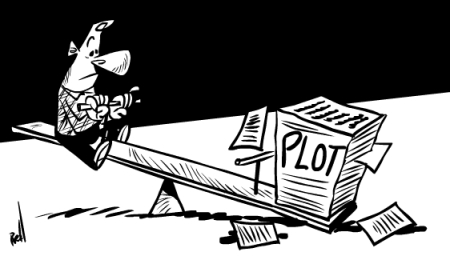
Here's an age-old question in story writing: what's more important, character or plot? Dennis Lehane talked about this last week, and followed that simple question up by saying "Plot without character is an amusement ride. Character without plot is a painting."

And that is so true. Plot and character are linked completely. External events (plot) trigger the internal turmoil that is inherent in your characters, but without the internal turmoil, the plot wouldn't be particularly interesting. In fact, you can build an entire plot based on a great character. But how do you build an interesting character?
One way to start is to think about the room they live in and build out. Consider the contents of their kitchen, their CD player, their book shelves, closet, etc. But although these things round the character out, they don't make the character. What makes the character is their quest for what they want: love, security, fulfillment, value, approval, fairness/justice, etc.
Most of us, when we first start forming our main characters, write someone who is very close to ourselves. You might not want to admit this, but it's true. (Come on, think about your main character, especially who they were in your very first draft. How much did they have in common with you, especially in terms of wants, desires, fears, etc? Probably a lot. Even J.K. Rowling did it, and fully admitted it, with Hermione.) But you lose objectivity in your character, because you can't remove yourself from them. So gradually you write them further and further away from you.
One thing you need to be careful of, something that can make your plot bland and even cliched, is making your heroes too heroic and your villains too evil. (The latter is something I'm struggling with right now.) Because I love HP, and I've already mentioned it, and I think most people reading this blog would get the reference, I'm going to continue with that example. Voldemort is obviously evil and awful. But, there are times in the book when you feel just a little sorry for him, particularly when we see the circumstances of his orphanage. Once we see his upbringing, we understand that he's complex and multi-dimensional. Every time you write about a good character, you need to ask yourself what's bad about them. And when you write about a bad character, you need to ask yourself what's good about them.
I mention all this stuff on character because, as I said before, if you have an incredible character you can create a plot around them. Let's take this list of qualities, totally stolen from an exercise we did with Lehane (the list is from a series of questions we all had to answer, then he drew one at random. These aren't my answers, and sadly I don't have the questions, but you can figure out the questions from the answers):
OK, I'll give you another exercise. Here's another list of traits. Write a short story, or just outline a plot, based on the list below. I copied the answers as they were read, so you can interupt them as you want.
In other news, I'm holding my first-ever contest! You all were such great little followers last week, telling me how wonderful and helpful all my posts were, that I've decided to give away not one but TWO signed books by some amazing authors! Tune in tomorrow for the details! (Hint: You might want to start following me now, before it technically starts, to give yourself a leg-up on the competition...)
Here's an age-old question in story writing: what's more important, character or plot? Dennis Lehane talked about this last week, and followed that simple question up by saying "Plot without character is an amusement ride. Character without plot is a painting."
One way to start is to think about the room they live in and build out. Consider the contents of their kitchen, their CD player, their book shelves, closet, etc. But although these things round the character out, they don't make the character. What makes the character is their quest for what they want: love, security, fulfillment, value, approval, fairness/justice, etc.
Most of us, when we first start forming our main characters, write someone who is very close to ourselves. You might not want to admit this, but it's true. (Come on, think about your main character, especially who they were in your very first draft. How much did they have in common with you, especially in terms of wants, desires, fears, etc? Probably a lot. Even J.K. Rowling did it, and fully admitted it, with Hermione.) But you lose objectivity in your character, because you can't remove yourself from them. So gradually you write them further and further away from you.
One thing you need to be careful of, something that can make your plot bland and even cliched, is making your heroes too heroic and your villains too evil. (The latter is something I'm struggling with right now.) Because I love HP, and I've already mentioned it, and I think most people reading this blog would get the reference, I'm going to continue with that example. Voldemort is obviously evil and awful. But, there are times in the book when you feel just a little sorry for him, particularly when we see the circumstances of his orphanage. Once we see his upbringing, we understand that he's complex and multi-dimensional. Every time you write about a good character, you need to ask yourself what's bad about them. And when you write about a bad character, you need to ask yourself what's good about them.
I mention all this stuff on character because, as I said before, if you have an incredible character you can create a plot around them. Let's take this list of qualities, totally stolen from an exercise we did with Lehane (the list is from a series of questions we all had to answer, then he drew one at random. These aren't my answers, and sadly I don't have the questions, but you can figure out the questions from the answers):
- Passion to learn
- Their eyes wander when they talk to people
- A bit bossy
- Their greatest desire is to be successful
- Wants unwanning drive
- Her sister has broken her heart, and she hurt her sister as well
- She cheated after drinking
- Afraid to fail
- Phobia of heights
- Does volunteer work
- Addicted to alcohol, exercise, marijuna, and tea
- Makes mistakes when she parties and drinks too much
- More than anything, wants to raise enough money to help her parents retire
OK, I'll give you another exercise. Here's another list of traits. Write a short story, or just outline a plot, based on the list below. I copied the answers as they were read, so you can interupt them as you want.
- Most proud of his wonderous humility
- Quirk: lines up Sweet & Low packets
- Snorts, not snores, in sleep
- Hopes for a quick death
- Wants to have their novel published
- His girlfriend's death broke his heart
- He doesn't like people and they know it
- He is afraid of lingering death
- Phobia: ferris wheel
- Once let down someone in need
- Has told big lies to the person he loves the most
- Addicted to cheap beer
- Once beat up a guy in a bar
- Nothing would make his life near-perfect
In other news, I'm holding my first-ever contest! You all were such great little followers last week, telling me how wonderful and helpful all my posts were, that I've decided to give away not one but TWO signed books by some amazing authors! Tune in tomorrow for the details! (Hint: You might want to start following me now, before it technically starts, to give yourself a leg-up on the competition...)
Thursday, January 21, 2010
Can't Get Your Point Across? Try a Different Form
Today's post is about form. Most of the people who read this blog are primarily novelists, but you might also dabble in other forms. Maybe you don't. If you don't, you should, and here's why:
Using a different form for your writing can put a whole different take on the piece and how it comes across.
My lecture this morning was from Sherri Reynolds, author of several novels and a play, Orabelle's Wheelbarrow. But Orabelle's Wheelbarrow didn't start as a play. It started as a novel, but was rejected by her editor. (Yes, she was already published. Yes, her novel, The Rapture of Canaan, had already been chosen as an Oprah's Book Club selection. Rejection can happen to anyone. Don't give up.) So she sat on it for a little while, but the story stayed with her.
Eventually, she decided to try writing the novel as a play to see if she got any ideas for developing it. She took a playwriting class and ended up with a 200-page play. (For those who don't know, that's....very long. Very.) Then she cut it down more and more, whittling out scenes until she ended up with 120 pages. That play won the Women Playwright's Initative award in 2005 and was published and produced - after she cut another 30 pages.
What does that have to do with anything? The point is, Orabelle's Wheelbarrow didn't work as a novel; it needed to be reimagined and thought about in a new way. So she thought on the form, created an incredible play, and in the end she thinks it works much better that way.
Tonight, I'm going to offer you a challenge....you could even call it an assignment (wow, I feel like Shannon with her USC Lessons over here.) This is the assignment we had in Sherri Reynolds' workshop, so I'll even tell you what I came out with and how I think it will really help me tell a story.
Assignment: Think about a piece of writing you've been struggling with, or a story you've wanted to tell for awhile but haven't been able to. The writing can be anything - a section in your current WIP, a short you've been mulling over, a novel you stuck in the drawer years ago...anything. Then, think about how you might reinvent it and write it in another form. It could be a poem, a piece of flash fiction, letters, a narrative essay, a play, a song, a diary entry, a sitcom - anything, as long as you change the form.
What I did: I know I'm usually full of wit and charm, but this is going to get serious, guys. A little more than six years ago, my mom died. She spent a few days in the hospital in a coma before she finally passed. On my first day visiting her, I held her hand in mine and squeezed it. She didn't squeeze back, and it was the first time I really felt like I knew she was gone (even though she hadn't died yet). I always knew I wanted to write something about the power of that moment, but for years I've struggled to find the words. And today it hit me - that isn't a short story, or even a section of a novel, which is what I'd always tried to write it as. It's a poem, using my mom's hand as a guide for me throughout my life, and showing the times she was there and when she wasn't. It was so obvious when I thought of it today I couldn't believe I hadn't thought of it before. (Probably because I don't really do poetry, but after hearing Beth Ann Fennelly read hers on Tuesday night...wow. I'm a poetry lover.) No, I will not be posting the lame poem I wrote here, unless I can clean it up some. But I do feel, for the first time, that the story is being told the way it should. And I feel so glad that I could finally get it down.
Another great thing that this lecture on form did is show how you can take something like a poem and come up with an incredible plot. We looked at a poem called Eulogy for a Snake Handler Killed by Canebrake. I won't post the poem here, because it's very long, but you can follow the link if you're interested and see that there is a LOT of story in that poem.
So the next time you're struggling to write something, remember - it might not be you, or the story, it might be the form that you're putting the story in.
Using a different form for your writing can put a whole different take on the piece and how it comes across.
My lecture this morning was from Sherri Reynolds, author of several novels and a play, Orabelle's Wheelbarrow. But Orabelle's Wheelbarrow didn't start as a play. It started as a novel, but was rejected by her editor. (Yes, she was already published. Yes, her novel, The Rapture of Canaan, had already been chosen as an Oprah's Book Club selection. Rejection can happen to anyone. Don't give up.) So she sat on it for a little while, but the story stayed with her.
Eventually, she decided to try writing the novel as a play to see if she got any ideas for developing it. She took a playwriting class and ended up with a 200-page play. (For those who don't know, that's....very long. Very.) Then she cut it down more and more, whittling out scenes until she ended up with 120 pages. That play won the Women Playwright's Initative award in 2005 and was published and produced - after she cut another 30 pages.
What does that have to do with anything? The point is, Orabelle's Wheelbarrow didn't work as a novel; it needed to be reimagined and thought about in a new way. So she thought on the form, created an incredible play, and in the end she thinks it works much better that way.
Tonight, I'm going to offer you a challenge....you could even call it an assignment (wow, I feel like Shannon with her USC Lessons over here.) This is the assignment we had in Sherri Reynolds' workshop, so I'll even tell you what I came out with and how I think it will really help me tell a story.
Assignment: Think about a piece of writing you've been struggling with, or a story you've wanted to tell for awhile but haven't been able to. The writing can be anything - a section in your current WIP, a short you've been mulling over, a novel you stuck in the drawer years ago...anything. Then, think about how you might reinvent it and write it in another form. It could be a poem, a piece of flash fiction, letters, a narrative essay, a play, a song, a diary entry, a sitcom - anything, as long as you change the form.
What I did: I know I'm usually full of wit and charm, but this is going to get serious, guys. A little more than six years ago, my mom died. She spent a few days in the hospital in a coma before she finally passed. On my first day visiting her, I held her hand in mine and squeezed it. She didn't squeeze back, and it was the first time I really felt like I knew she was gone (even though she hadn't died yet). I always knew I wanted to write something about the power of that moment, but for years I've struggled to find the words. And today it hit me - that isn't a short story, or even a section of a novel, which is what I'd always tried to write it as. It's a poem, using my mom's hand as a guide for me throughout my life, and showing the times she was there and when she wasn't. It was so obvious when I thought of it today I couldn't believe I hadn't thought of it before. (Probably because I don't really do poetry, but after hearing Beth Ann Fennelly read hers on Tuesday night...wow. I'm a poetry lover.) No, I will not be posting the lame poem I wrote here, unless I can clean it up some. But I do feel, for the first time, that the story is being told the way it should. And I feel so glad that I could finally get it down.
Another great thing that this lecture on form did is show how you can take something like a poem and come up with an incredible plot. We looked at a poem called Eulogy for a Snake Handler Killed by Canebrake. I won't post the poem here, because it's very long, but you can follow the link if you're interested and see that there is a LOT of story in that poem.
So the next time you're struggling to write something, remember - it might not be you, or the story, it might be the form that you're putting the story in.
Wednesday, January 20, 2010
Critiques: Turning Your Plot Upside-Down Since 1485
I want to start out by saying I'm sorry I didn't blog yesterday. I got so many ideas for posts from yesterday alone that I couldn't even decide which topic to address, and I was going to decide at the last minute, but then the last minute came and I laid down in my husband's lap at the early, early hour (for me, anyway) of 11pm and fell soundly asleep in the middle of an extremely exciting episode of Dexter (my new favorite television show). So I've decided to hold off on those genius ideas until next week, or possibly later, because I've been gaining new followers every day and I love that, so now I'll tease you with the promise of more excellent content.
Now, onto the post: my workshop critique was Monday. I was very nervous. Although I've sent things out to people to read and critique before, it's never happened in real life, where I knew the people beforehand, then had to spend the rest of the week with them afterward.
For the most part, everything went very well in the oral critique. The worst part was that I didn't edit as well as I should have, so I had some tense issues, which caused my teacher, Stewart O'Nan, author of many books to say, "You change tenses so much it makes us want to stab you." Nice.

Here's the most frustrating thing that happened, and is a great lesson to you writers out there: I wasn't allowed to talk during the critique, which I thought would be fine. Then they started discussing Kaia's reaction to something that happens, saying they didn't think she would get that emotional because she didn't show emotion over an event that happened in the past. At first I was frustrated. I wanted to scream, "But she DOES show emotion to that other event, stupid!! You just didn't read it right!"
But after they spent three minutes discussing it, I realized something: if nine intelligent people (writers and mostly avid readers) who read the MS twice with the intention of critiquing it hadn't picked up on something, then it wasn't that they hadn't read it right - it was that I hadn't written it well enough. Instantly, I was thankful for the rule that I wasn't allowed to speak, because if I had pointed out the line which mentions it, they would have said, "Oh, OK," and moved on, and I wouldn't have fixed my weak writing.
Tonight, I started looking over the mark-ups and written responses. One of them in particular really stood out to me, because the critiquer literally rewrote a lot of the MS. I'm not talking a suggestion here or there - I mean crossed out half of the page and rewrote it using totally new words and descriptions. Yikes. I always thought that was stepping on the writer's toes a bit. Granted, this particular writer is very good with language. Still, if I think a paragraph or sentence needs work, I'll write something like, "Needs work" or "passive" or "not enough detail." I won't insert detail or rewrite the thing. I do suggest lines occassionally, but I thought this was a lot. Am I wrong to think that? Do most people rewrite a MS they get? (that wasn't my experience with anyone else).
Again, though, I saw a general fondness for my plot, with a few notes on holes (which can easily be patched). Two or three people said I still needed to clean up my writing, and that's fine; I know I'm learning, and that's why I picked this conference. It is great for people who really want to focus on craft. I honestly feel like I can learn to be a better writer, but I can't learn to have a great plot, so I'm very excited about this.
There were a lot of notes on how much they loved my opening, but I'm also thinking I might need to change it based on some other notes I got. I'll still keep the opening line in there, just move it a little later. It's such a great line, and it sets the novel up excellently, but I'm not sure it's perfect anymore. And the opening needs to be perfect.
This whole process was enlightening, though. I'd always heard writers talk about "killing your darlings," but I hadn't yet experienced that. Not that I thought I was so wonderful, but just that I hadn't found anything that I LOVED that I needed to kill. But it's definitely coming now, so I'm starting to get sad. I'll just file it away, though, and remember that it's not dead; it's just sleeping.
Subscribe to:
Posts (Atom)